

Luxury is easiest to photograph in September light. It is hardest to prove in January — when the envelope is under stress, the mechanical rooms are working overtime, and a single ignored detail can undo a season of careful living.
This article contains affiliate links. As an Amazon Associate I earn from qualifying purchases.
That is why estates above $700k deserve a pre-winter systems check that is editorial in tone and rigorous in practice: not a panic punch list, and not a contractor dump of every possible upgrade. A composed audit of climate control, filtration, moisture and leaks, and power resilience — timed before the first hard freeze — is how serious houses keep their composure when the weather stops cooperating.
Luxury Hôm already maps the broader seasonal care language in The Luxury Home Fall Maintenance Checklist. This piece is the systems chapter: what buyers notice on a late-fall tour, what sellers should be able to answer without improvising, and which quiet upgrades protect both comfort and value.
Why systems are a luxury amenity language now
Affluent buyers have grown fluent in soft luxury — light, material, outdoor rooms, privacy. They are also increasingly fluent in hard performance. A house that looks finished but cannot hold temperature evenly, keep basement humidity in check, or stay operational through an outage fails a quieter test: Will this estate still feel expensive when life is less photogenic?
That test sits beside privacy and protection. Backup power and envelope integrity already appear in the security conversation on Luxury Hôm in Security as the New Luxury Amenity: Soft Screening to Hardened Homes. Pre-winter is when those promises get scheduled — service dates, filter changes, sensor placement, generator or power-station readiness — instead of deferred until the first ice storm.
In a fall market with more upper-tier doors to walk through — When Luxury Sellers Return: What Rising Fall Listings Mean Above $700k — systems clarity is also competitive presentation. Liquid buyers discount uncertainty. A one-page winter readiness brief in the listing file beats a shrug about “the HVAC guy coming sometime.”
Climate and filtration: comfort you can underwrite
Start with what the household feels every day.
Thermostats and zoning. Confirm that zones actually hold setpoints, that sensors are not fighting sun-loaded rooms, and that schedules match how the house is lived in — not how it was demonstrated at closing. A modern smart thermostat is useful when it reduces friction and reveals problems early; it is noise when it sits on a wall nobody trusts. For many estates, an upgrade such as an ecobee-class control is less about novelty and more about visibility: remote awareness, room sensors, and a calmer interface for staff or traveling owners.
Filtration. Winter seals the house. That makes filter quality a wellness and finish issue, not only a mechanical one. Stepping furnace filtration toward a serious MERV rating (where the equipment allows) supports cleaner air through months of closed windows — the same composure buyers now associate with recovery rooms and longevity-minded plans in Private Recovery Circuit: What Buyers Tour for in Sauna, Plunge, and Rest Rooms. Change filters on a dated schedule, not when the return grille looks apologetic.
Service timing. Book the heating tune-up before the first cold snap books it for you. Document what was done. Transferable service history reads as estate maturity on a showing.
Moisture and leaks: the quiet winter destroyers
Cold weather does not invent water problems; it reveals them. Condensation, closed-up basements, and vacation absences turn small failures into finish emergencies.
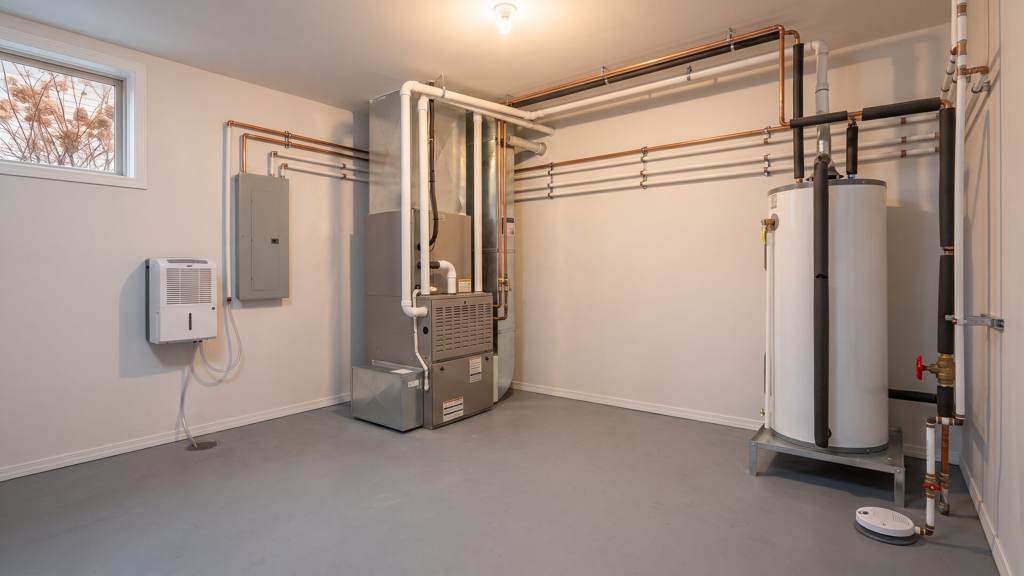
Basement and lower-level humidity. A properly sized dehumidifier, maintained and drained correctly, protects millwork, stored textiles, and the emotional reading of lower levels that luxury programs increasingly use for wellness, wine, or guest suites. Stale, damp air is not a “basement smell.” It is unfinished systems language.
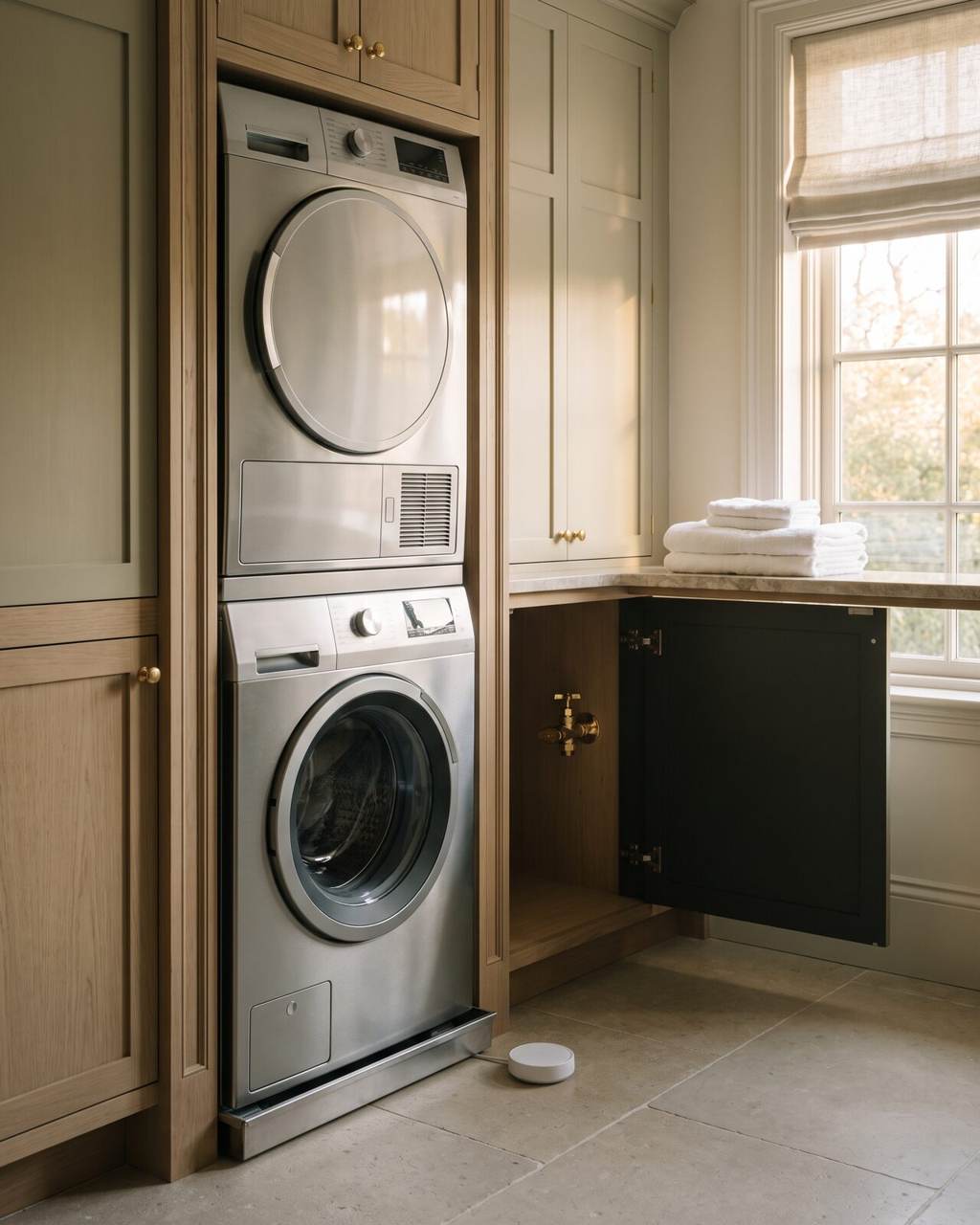
Leak detection. Smart water leak sensors at water heaters, mechanical rooms, laundry, ice makers, and under primary baths are among the highest composure-per-dollar additions on an estate. They do not replace shutoff strategy or quality plumbing; they buy time. Place them where a failure would be expensive and invisible — then confirm notifications reach someone who can act when the household is traveling.
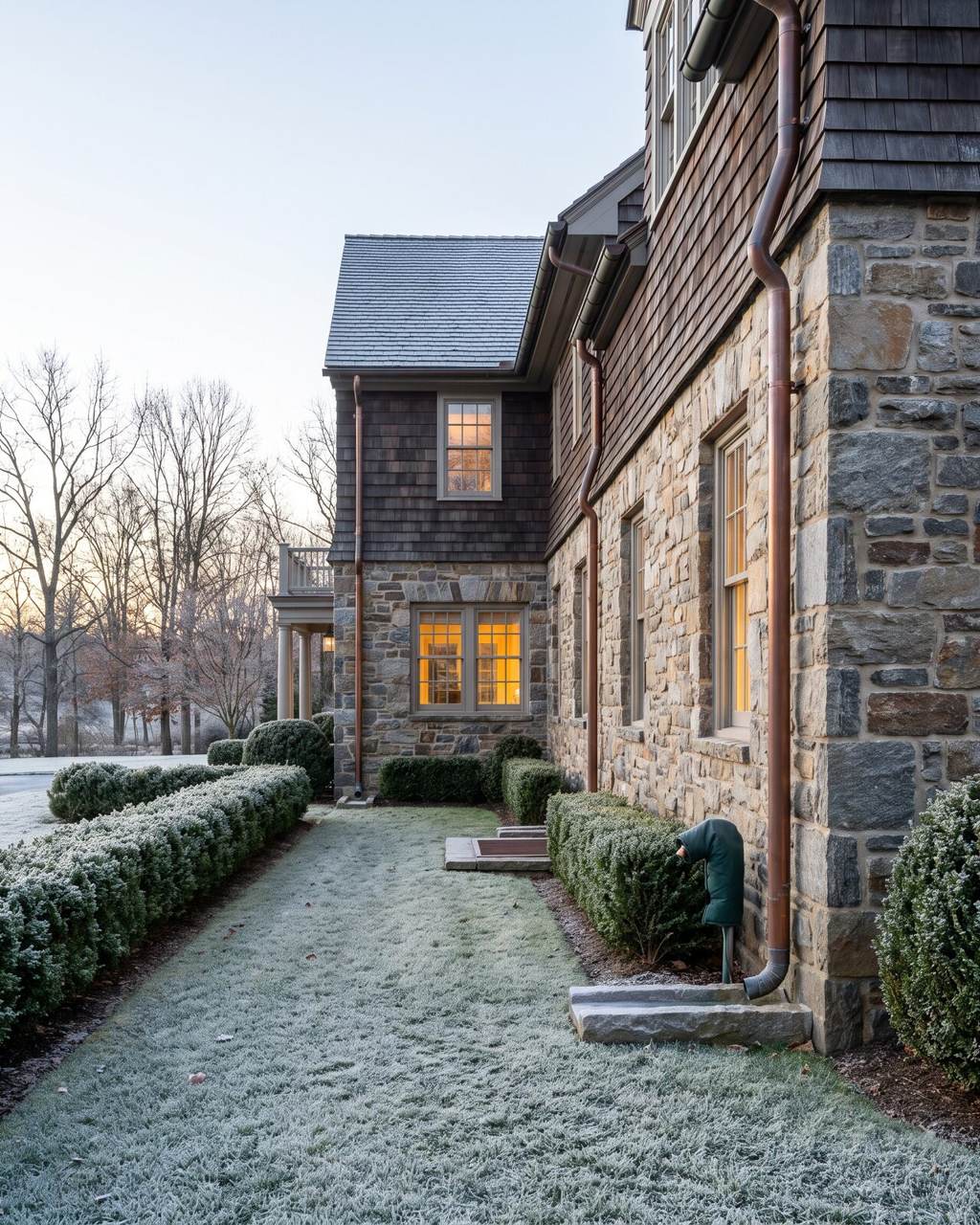
Envelope adjacency. Pair interior sensors with a quick exterior read: gutter discharge away from foundations, hose bibbs prepared for freeze, and any known weak thresholds noted for a qualified contractor. Soft outdoor living still matters in late fall — Beyond the Patio: Designing an Outdoor Living Space for the Fall Season — but winter readiness is what keeps those rooms from becoming freeze-damage footnotes.
Power resilience without fortress aesthetics
An estate that goes dark in a storm is temporarily uncomfortable and temporarily undefended. Pre-winter is when backup strategy should be stated clearly.
That may mean a standby generator with a documented transfer plan, or — for shorter interruptions and selective loads — a home backup power station strategy for essentials: communications, critical circuits, medical or security devices, and enough climate assist to protect pipes and finishes. The refined presentation is the same as security hardware: capability without theater. Buyers want to know the house can stay operational; they do not need a sales-center speech about apocalypse.
If you list before spring, put resilience in the protection brief alongside access and monitoring. If you are staying, put a test date on the calendar before the ice arrives.
The pre-winter estate checklist
Climate
- Heating service completed and logged.
- Zones verified; problem rooms noted.
- Thermostat/sensor logic reviewed for travel and occupancy.
- Filters upgraded or replaced on a written cadence.
Water and moisture
- Dehumidifier capacity and drainage confirmed for lower levels.
- Leak sensors placed and notification paths tested.
- Water heater age and shutoff access known to household and staff.
- Exterior water points winterized.
Power and operations
- Backup power tested; fuel/charge plan current.
- Critical circuit list written (not remembered).
- Security, access, and communications behavior during outage understood.
- Vendor contacts for HVAC, plumbing, and electrical in one place.
Presentation (if listing)
- One-page winter readiness brief for the file.
- Mechanical rooms tidy enough to tour without apology.
- No improvising about service dates on a showing.
Quiet resilience as a purchase filter
None of this requires inventing statistics or predicting the winter. It requires treating systems with the same editorial seriousness Luxury Hôm already applies to staging, privacy, and seasonal living. A beautiful house that cannot hold winter is unfinished. A beautiful house with a calm pre-winter plan feels like mastery of daily life — the same standard buyers bring to recovery circuits, outdoor rooms, and long-horizon design.
Luxury Lives Here through February, not only through fall photography. The estates that feel most expensive after the first freeze are often the ones that never had to announce how carefully they were prepared.