

You find out how good an outdoor space is when summer ends. On a perfect evening almost any terrace feels nice. The real test is a cold October night, when heat, lighting, shelter and materials decide whether the doors stay open or everyone gives up on the outdoors until spring.
For a luxury home, stretching the season takes more than a few patio heaters. The fall spaces that work are real outdoor rooms. They're tied into the architecture, they're built for the local climate, and they get the same care for comfort and proportion as the rooms inside.
Decide how you'll use it
Figure out what the space is for before you pick a single finish. A terrace for drinks around a fire needs a different plan from an outdoor dining room, a poolside lounge or a morning pavilion. A big property can have several of these, but each one should have a clear job.
Think about how people actually leave the house. The seating area that gets used most in fall usually isn't the farthest or most dramatic spot. It's the one that's easy to reach from the kitchen, library or family room. Wide openings, level thresholds and a short trip to food and drinks keep people coming back.
Orientation is the thing people skip. Morning sun makes a breakfast terrace comfortable well into September, while an evening lounge out in the prevailing wind won't get much use in November. We'd have a landscape architect look at sun, shade, drainage, wind and views before anything permanent is built.
Build the fire into the architecture
Nothing changes an outdoor room like fire. A masonry fireplace gives you heat, light and a focal point, and it anchors a seating group the way a fireplace does inside. Built into a wall or pavilion, it also adds privacy and blocks the wind.
Wood gives you the smell and the ritual. Gas gives you instant heat you can control, with a lot less fuss. Which one's right depends on local rules, how much upkeep you want and the mood you're after. Either way, scale matters. The fireplace should suit the house and the size of the outdoor room, and a fire feature that's too small looks temporary in a big setting.
Linear fire tables and sculptural fire bowls suit contemporary gardens. Put them where guests get the warmth without losing the view. Around a dining table, overhead or perimeter heaters usually make more sense than an open flame.
Heat you don't see
Radiant heat under the paving is one of the most discreet luxuries you can add. Laid under stone or porcelain, it warms the surface and can help keep frost and light snow from building up. It's especially worth it under covered terraces, at the edge of the spa and along the main paths out to a guesthouse or pool house.
Overhead, infrared heaters can sit recessed in the ceiling or tucked into beams. They warm people directly instead of trying to heat the sky. The catch is that they have to be planned early, or you end up with exposed conduit and a clunky switch, when the goal is for them to disappear the way a well-designed control system does indoors. Zone them so you're only heating the corner people are sitting in.
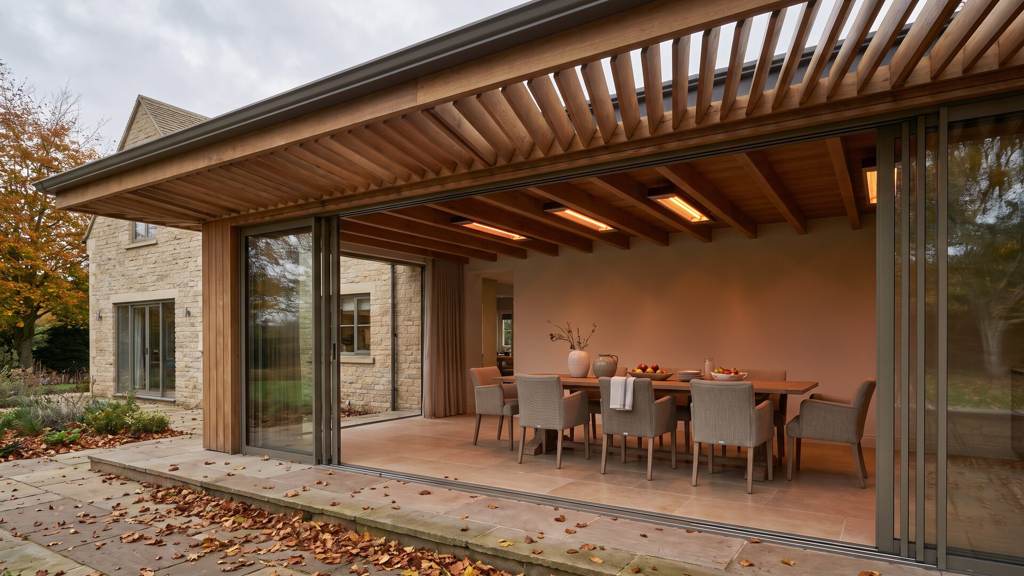
Shelter makes every heater work harder. Deep roof overhangs, operable louvers and four-season pergolas keep the rain off and still let in air and views. Retractable screens or frameless glass can cut the wind without closing the room in. In some climates a pavilion with sliding glass walls can go from open terrace to conservatory and back again.
Materials that look good after year one
Outdoors, the day it's installed tells you almost nothing. What you want to know is how it looks after a few winters. Freeze-thaw cycles, rain, UV and a steady fall of leaves and twigs find the weak materials fast.
For paving, dense natural stone, exterior-rated porcelain and well-detailed concrete are all good choices, but every site needs an expert to specify it. Drainage, substrate prep, expansion joints and sealants matter as much as the surface you see. In cold regions, stone picked without checking its porosity can crack or spall.
For structures and millwork, thermally modified wood, teak, cedar and good metal systems hold up and still feel warm. Let natural materials weather, or set up a maintenance plan to keep their original color. Trying to make every outdoor surface look brand new forever is more work than it's worth.
Furniture should feel solid enough for the setting but not so heavy you can't store or cover it. Powder-coated aluminum, teak and woven all-weather fibers can all carry a refined shape. Performance fabrics now feel and look like indoor fabrics while shrugging off moisture and fading, and several of the houses we specify from now design their outdoor collections to match their indoor seating. Removable covers and cushions built to breathe dry out fast after a damp night.
Lighting for early sunsets
In fall you need the lights on much earlier. One bright fixture can't give an outdoor room any subtlety, so light it in layers.
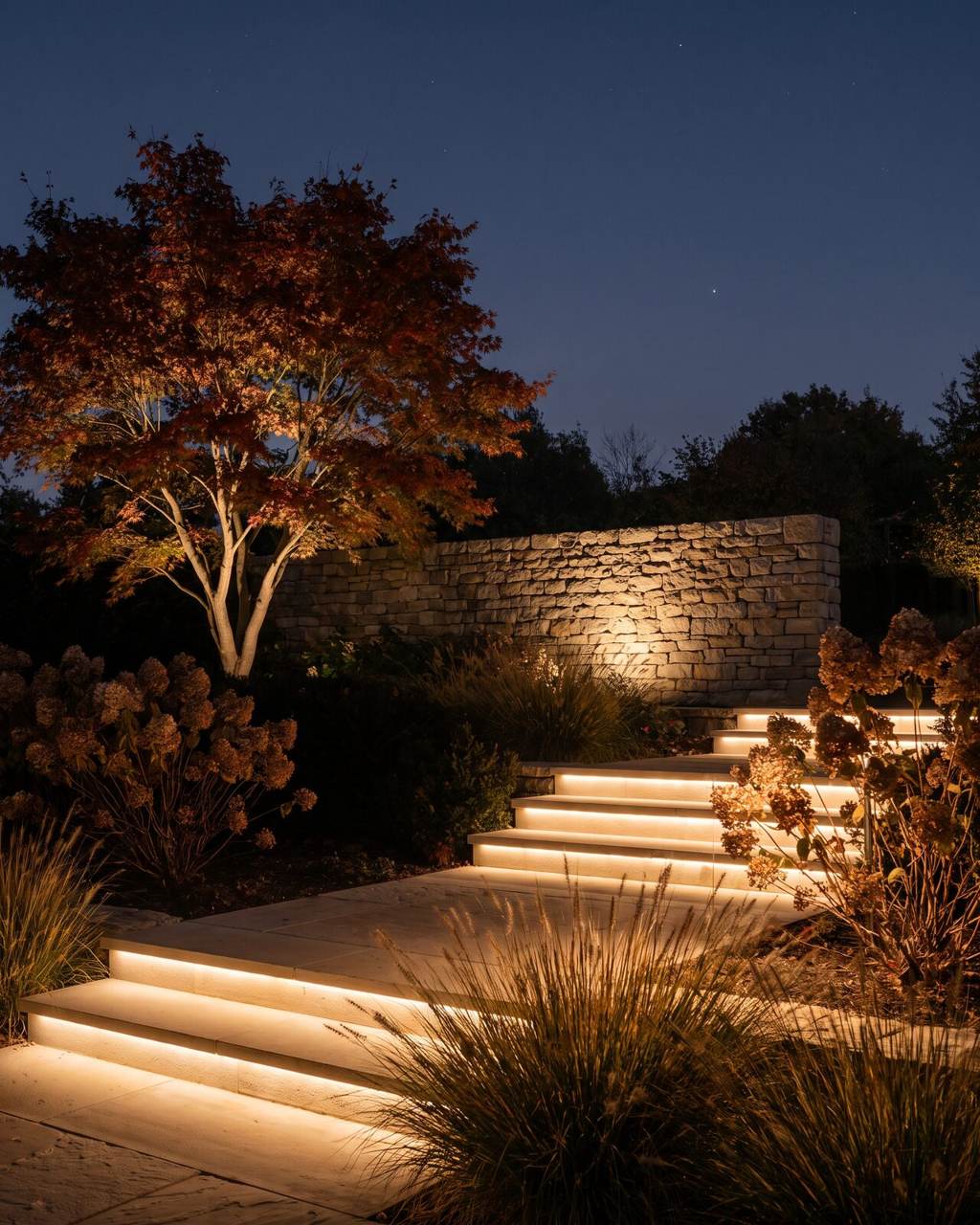
Architectural lighting can wash a stone wall or pick out the frame of a pavilion. Low path lights should guide people without turning the walk into a runway. Hidden step lights make stairs safer, and portable table lamps and shielded sconces make the seating and dining areas feel close.
Light a few trees to give the garden depth, and stop there. Darkness is a material outdoors. Leave some shadow so the firelight still looks good and you can see the night sky. Warm, dimmable light flatters stone, wood and faces far better than cool white.
Keep the controls simple. A few preset scenes (arrival, dining, fireside, late evening) can run the lighting and heat together so nobody has to fiddle with individual fixtures.
The outdoor kitchen, planned for cold weather
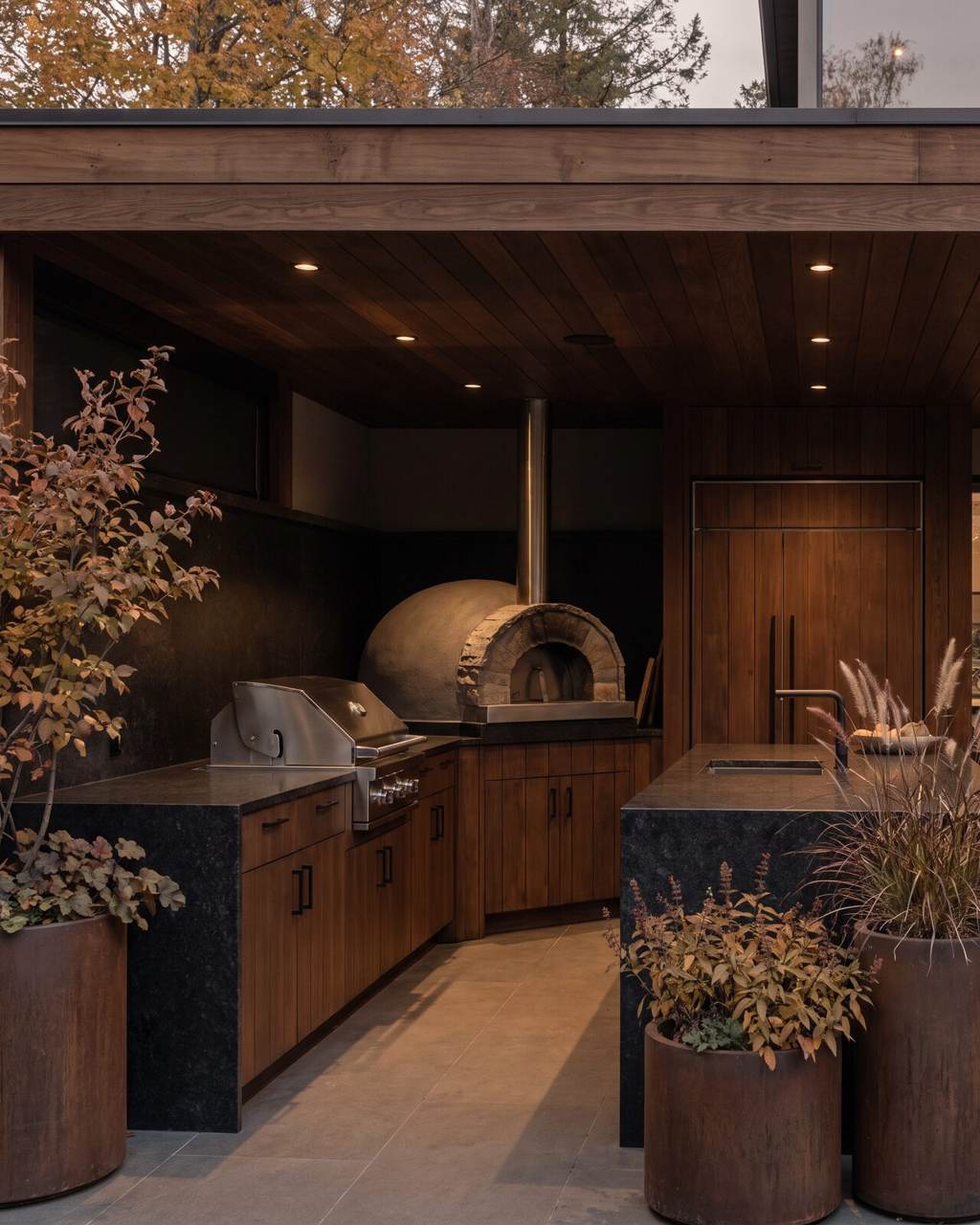
A grill on its own won't get you through October. If you want to cook outside in the fall, you need a roof over the cooking area, good task lighting, a fridge that's protected from the weather, counter space to set things down, and somewhere to keep plates and glasses. A pizza oven, a warming drawer or a power burner makes cold-weather cooking easier, and a drinks station out there saves a lot of trips inside.
Be pickier about materials out here than you would be indoors. The countertop is going to see frost one week and a hot grill the next, and cabinets meant for a kitchen will swell and peel. If you get real winters, plan shutoffs, insulation or winterizing for the plumbing. The planning is the same as an interior kitchen renovation, except the weather gets a vote on every decision.
Keep the cooking close enough to the table that the host isn't cut off, but think about smoke, wind and ventilation. The nicest terrace in the world loses its charm if the smoke keeps blowing into guests' faces.
Furnish it for comfort
Comfort in fall is mostly about layers. Deep seats, dining chairs with some padding, throws with texture and an outdoor rug take the edge off all that stone. We'd also keep clean blankets in a cabinet or a heated drawer close by, so guests don't have to ask for one.
Don't forget sound. If you put in speakers, spread them out and run them low so the music is everywhere and nowhere. One loud speaker in the corner ruins it. Some nights, though, the fire and a fountain and the wind in the trees are better than anything on a playlist.
Planting helps. We like ornamental grasses, Japanese anemone, autumn fern, sedum and hydrangea, plus a tree or two picked for fall color. Big pots with evergreen structure and trailing foliage carry the terrace through to winter.
Plan now for next fall
Some upgrades can happen right away: new lighting scenes, fitted furniture covers, performance fabrics or a well-proportioned fire bowl. Architectural work takes longer. Custom steel doors, masonry fireplaces, radiant systems and pavilions can involve designers, engineers, permits and specialist fabricators.
That's why August is a good month to look at how the property handles the change of season. Use this fall to watch where the wind comes in, which areas lose the sun first and how people move around after dark. Design over the winter and you can build before next fall. The notes you take also fit right into the fall maintenance review the rest of the property needs anyway.