

For a generation of luxury marketing, wellness meant a soaking tub with a view and a gym that looked unused in photographs. That story still sells. What has moved into the tour brief is more specific and harder to fake: whether the house supports a daily recovery ritual — heat, cold, quiet, clean air — without sending the household to a club or a hotel.
This article contains affiliate links. As an Amazon Associate I earn from qualifying purchases.
Buyers above $700k are not asking for a resort wing. They are asking for a private recovery circuit: a short, composed sequence of spaces that can be used before work, after training, or between travel days. Sauna or infrared heat. A plunge or cold immersion that is actually maintained. A rest room that is not a leftover guest bath. Air quality and acoustics that make the ritual restorative instead of improvised. The estates that feel finished in 2026 increasingly treat that stack as lifestyle infrastructure — closer to the composure thesis already on Luxury Hôm in Security as the New Luxury Amenity: Soft Screening to Hardened Homes than to weekend spa kitsch — privacy and recovery both reward rooms that feel intentional, not bolted on.
What “circuit” means on a showing
A circuit is not square footage. It is order, adjacency, and finish quality.
Serious buyers walk the path the body would take. Can you move from heat to cold without crossing a formal living room in a robe? Is there a place to sit, hydrate, and cool down that does not feel like a hallway afterthought? Does the suite have proper ventilation and moisture control, or will the plaster tell on you in two winters? Is the cold plunge a designed vessel with filtration and temperature discipline — or a decorative tub that photographs once and then sits empty?
When the answers feel intentional, the amenity reads as architecture. When they feel bolted on, it reads as a renovation brochure. That distinction matters in a fall market where more owners are listing and buyers compare side by side — the inventory texture already framed in When Luxury Sellers Return: What Rising Fall Listings Mean Above $700k.
Heat, cold, rest — three rooms, one mood
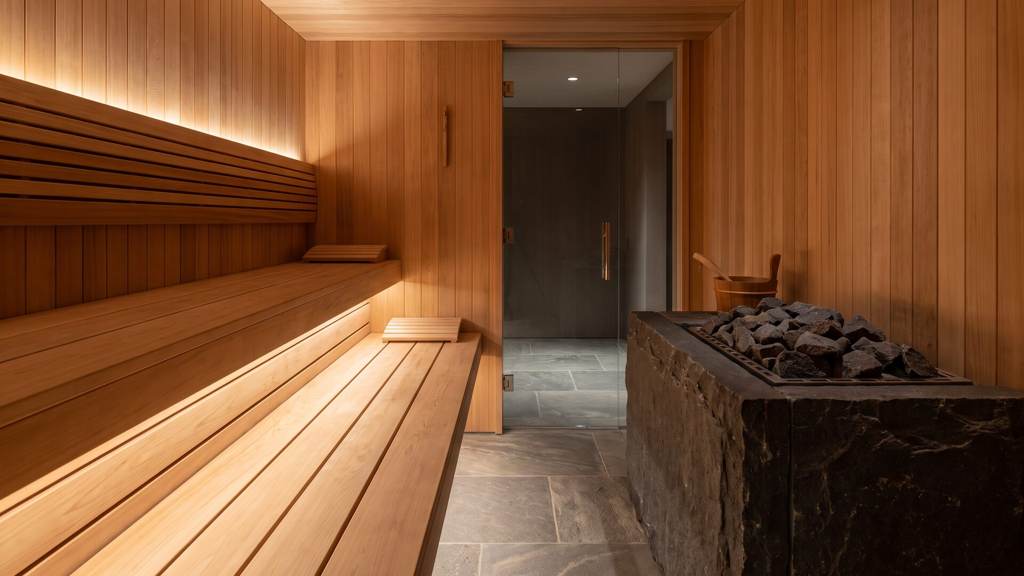
Heat. Traditional sauna, infrared cabin, or a beautifully detailed steam room can all work. What buyers score is whether the space feels private, well ventilated, and calm — not whether the brochure lists every modality. Materials should tolerate moisture without looking institutional. Lighting should be low and warm. Storage for towels and robes should be designed in, not piled on a chair.
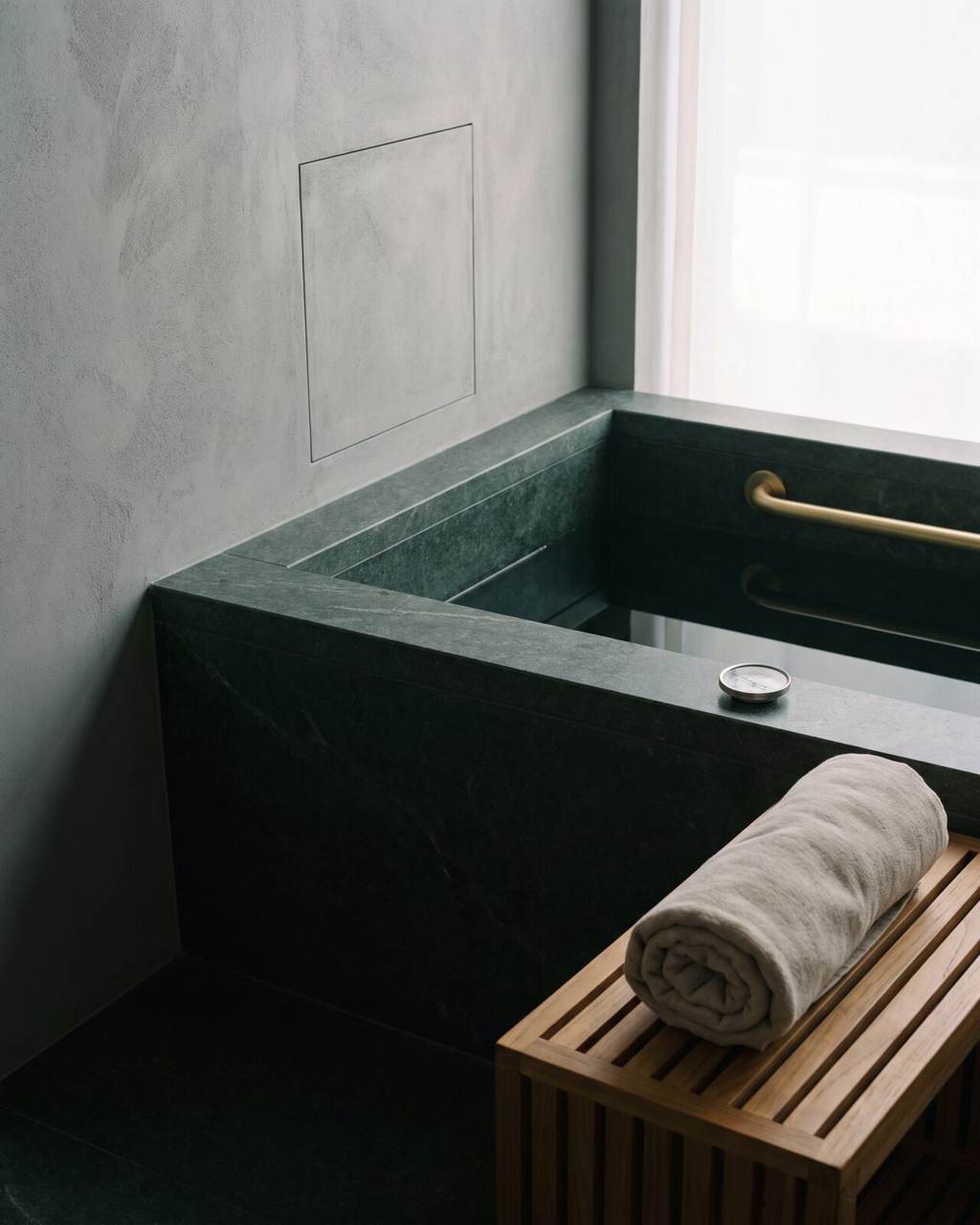
Cold. Plunge culture has moved from athlete edges into affluent residential briefs, but only when maintenance is honest. Temperature control, water quality, and a surface that does not announce itself as a science project are the filters. A thermometer that makes the ritual precise is a small detail; a vessel that cannot hold a steady cold is a large one. Pair cold with a clear exit to dry space — tile that is sure-footed, a bench that invites lingering, nothing theatrical.
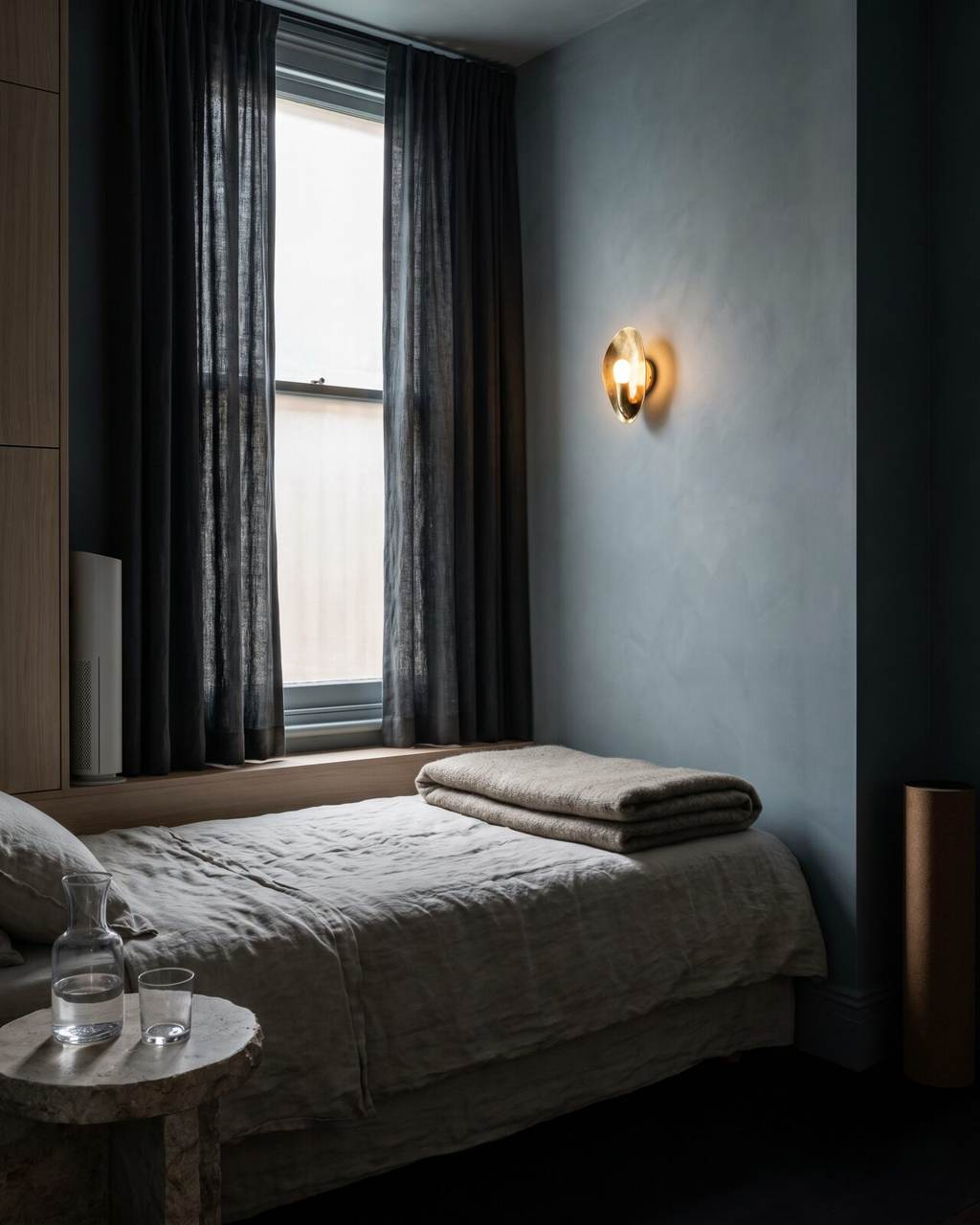
Rest. The most overlooked room in the circuit is the one after. A rest room or recovery lounge needs blackout capability or soft ambient light, quiet mechanicals, and air that feels considered. Lighting should feel local and intentional — soft pools of glow, not a bright overhead that breaks the spell — the same preference for local truth over blunt national averages framed in Where Luxury Begins Now: Why the $1.2M National Threshold Misleads Local Buyers. A HEPA-grade purifier in a closed recovery suite is not medical theater; it is the same composure buyers now expect from whole-home air and filtration stories.
Soft presentation, hard performance
Sellers should present recovery the way Luxury Hôm asks them to present security and privacy: composed, not alarmist, and never over-explained in public marketing. Show the suite as a finished sequence in photographs — heat volume, plunge edge, rest lounge — without turning the gallery into an equipment catalogue. Leave the full systems walk for qualified showings: ventilation, moisture management, electrical load, water treatment, and who services what.
That editorial restraint matches the discipline in Seller Staging That Photographs Like Editorial (Without Looking Staged). Stage towels, a quiet vessel, and empty surfaces. Do not stage every gadget. Buyers who care about recovery can feel when a room was designed for ritual versus dressed for a weekend open house.
Pair the wellness story with ordinary estate readiness. Moisture, filtration, and seasonal systems checks belong in the same value-protecting language as The Luxury Home Fall Maintenance Checklist. A recovery wing that fights humidity or smells of stagnant water is not a luxury amenity; it is deferred maintenance wearing a spa robe.
The buyer tour checklist
On a showing, ask in this order:
- Adjacency — Heat to cold to rest without theatrical corridors or public exposure.
- Moisture and air — Ventilation, humidity control, and finishes that will still look expensive after daily use.
- Cold discipline — Temperature control, water quality, and a plan that is actually used — not a prop.
- Rest quality — Darkness or soft light, quiet mechanicals, seating that invites ten minutes of stillness.
- Privacy — Sightlines from staff routes, guest rooms, and outdoor edges; recovery is personal.
- Service — Who maintains the equipment, and is that story transferable at closing?
- Integration — Does the circuit feel like the house — materials, lighting, acoustics — or like a kit dropped into a basement?
If three or more answers feel improvised, budget for a true retrofit — or keep shopping. At this tier, a coherent recovery circuit is easier to buy correctly than to invent later without scars to tile, structure, and mechanicals.
Ritual without resort theater
The private recovery circuit is not a claim that every estate needs a commercial spa. It is a claim that affluent buyers increasingly underwrite daily restoration the way they underwrite outdoor rooms and privacy: as part of how “finished” is defined. Heat, cold, and rest work when they share one mood — quiet, durable, and slightly invisible — and when the house can support them as systems, not as weekend aspirations.
Luxury Lives Here includes the right to recover at home without announcing it to the street. The estates that feel most expensive after a long travel day are often the ones that never had to explain how carefully the circuit was planned.