
This article contains affiliate links. As an Amazon Associate we earn from qualifying purchases.
The tree is the one piece of holiday decor that has to be planned like furniture.
In a house with eighteen-foot ceilings, a seven-foot tree looks lost, and a fourteen-foot fir that arrives without a plan ends up leaning against the stair rail while three people argue about the stand. The good news for this year: the Real Christmas Tree Board's September 2026 survey of 47 wholesale growers found 85% rated supply as strong or very strong. Tall, full trees should be easy to find. The work is in sizing it, setting it, and keeping it fresh until the last guest leaves.
Measure the room before you shop
Start at the ceiling, not the lot. Take the finished ceiling height where the tree will actually stand (under a beam or a chandelier it's lower than you think), then subtract the stand and the topper. We'd leave about a foot of clear air above the topper. A tree that grazes the ceiling looks wedged in, and you'll want room to reach the top with a ladder.
Width matters just as much in a big room. Tall trees get wide at the base, and a full-profile fir can take over the path between the sofa and the terrace doors. Tape a circle on the floor at the listed diameter and walk around it for a day. If you're turning sideways to get past it, go narrower or pick a slim profile.
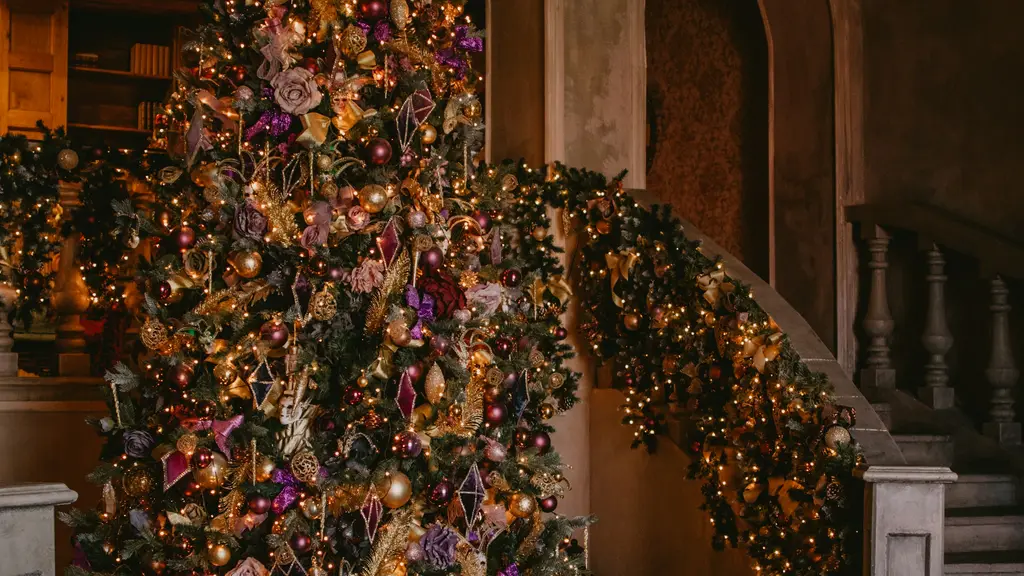
In a two-story foyer, look up at sightlines from the landing too. That's where most guests first see the tree, and a bare or lopsided top shows from there.
Real or artificial: our take
We like a real tree in the main room. A fresh Fraser or Nordmann fir smells right, holds ornaments well, and looks like it belongs in a house with stone and plaster. It does ask for daily attention, and a very tall one needs a crew to bring in and haul out.
Artificial makes sense in a few specific spots: a second tree in the guest wing, a vacation house nobody will be in to water, or a foyer where a fourteen-foot real tree would need lifting gear. If you go pre-lit, look for the UL mark on the tree itself. UL wrote fire-test requirements for pre-lit artificial trees (its Outline 2358) after research found that some artificial trees burned as hard as a dried-out natural one, and its program covers trees from 30 inches up to 12 feet. Above that height, you're buying on the maker's word and your own judgment.
A big tree drinks a lot of water
This is where most tall trees fail. The National Christmas Tree Association's rule of thumb is a stand that holds about 1 quart of water per inch of trunk diameter, and it notes a fresh tree can drink up to that much per day in the first week. A six-inch trunk wants a stand that holds at least six quarts with the tree in it. Some stands marketed for large trees hold less than that, so check the capacity on the box.
The rest of the NCTA's advice is short and worth following exactly:
- Cut about a half-inch disk off the base, straight across, right before it goes in the stand.
- Get it into water within six to eight hours of that cut.
- Use plain tap water. The association says additives and home recipes can actually hurt moisture retention.
- Keep the trunk whole. Shaving the sides to fit a small stand strips the wood that takes up the most water.
Check the level every day, and look at the trunk, not the bowl. A stand can still hold water while the cut end sits above it.
On a tree that's twelve feet and up, ask the farm or the installer to bring a stand rated for the trunk, and think about tying the top back to a small hook in the wall or a stair baluster with clear fishing line. It's a two-minute job that saves a tall, heavy tree from tipping when a dog or a toddler finds it.
Where it goes: hearth, vents, and floors
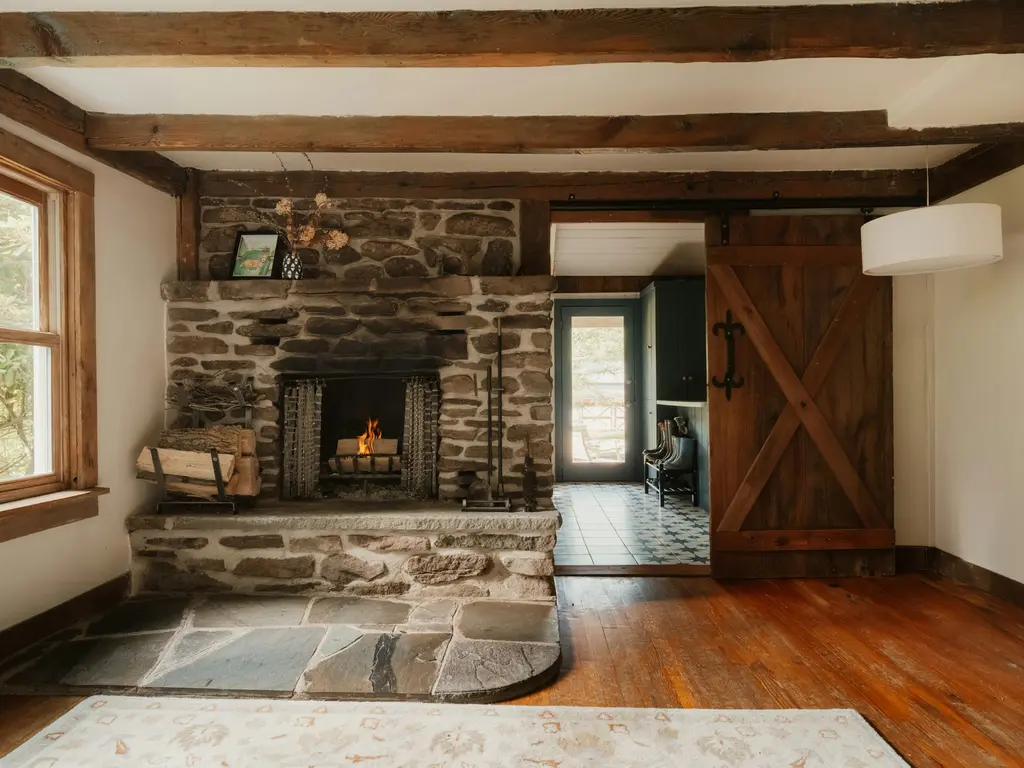
The National Fire Protection Association asks for at least 3 feet between the tree and any heat source: fireplaces, radiators, heat vents, candles. In a great room built around a big fireplace, that usually means the tree goes on the opposite wall or in a corner, with the hearth left to stockings and greenery. Our fireplace ideas for luxury homes covers how to keep the mantel looking full without crowding the firebox.
Heat you can't see counts too. A tree sitting over a radiant floor zone or next to a supply register will dry out much faster, and the NCTA points out that a cooler room slows drying. If you can set that zone a few degrees lower for the season, do it.
Water and wood floors need a plan. Put a waterproof tray or mat under the stand, then the tree skirt over it, so a spill or a slow overflow never reaches oak or walnut. Winter air is already hard on those floors (our guide to winter humidity in luxury homes gets into why), and a hidden puddle under a skirt for three weeks is how boards cup.
Keep the tree clear of doors and the main path out of the room. NFPA lists a blocked exit as one of the basics to avoid, and in a crowded holiday party it's easy to forget.
Lights and the electrical side
NFPA data from 2020 to 2024 counted an average of 143 home fires a year that started with Christmas trees, and nearly half involved electrical problems. That's why the light choice matters more than it seems.
Use LED mini lights. The NCTA notes that low-heat lights slow drying, and LEDs barely get warm. Buy sets with a mark from an independent testing lab such as UL or ETL, which NFPA recommends, and toss any strand with cracked wire or loose sockets. On a tall tree, plan the cords before you start: run a single heavy extension along the wall instead of daisy-chaining a dozen strands, and stay within what the circuit can carry.
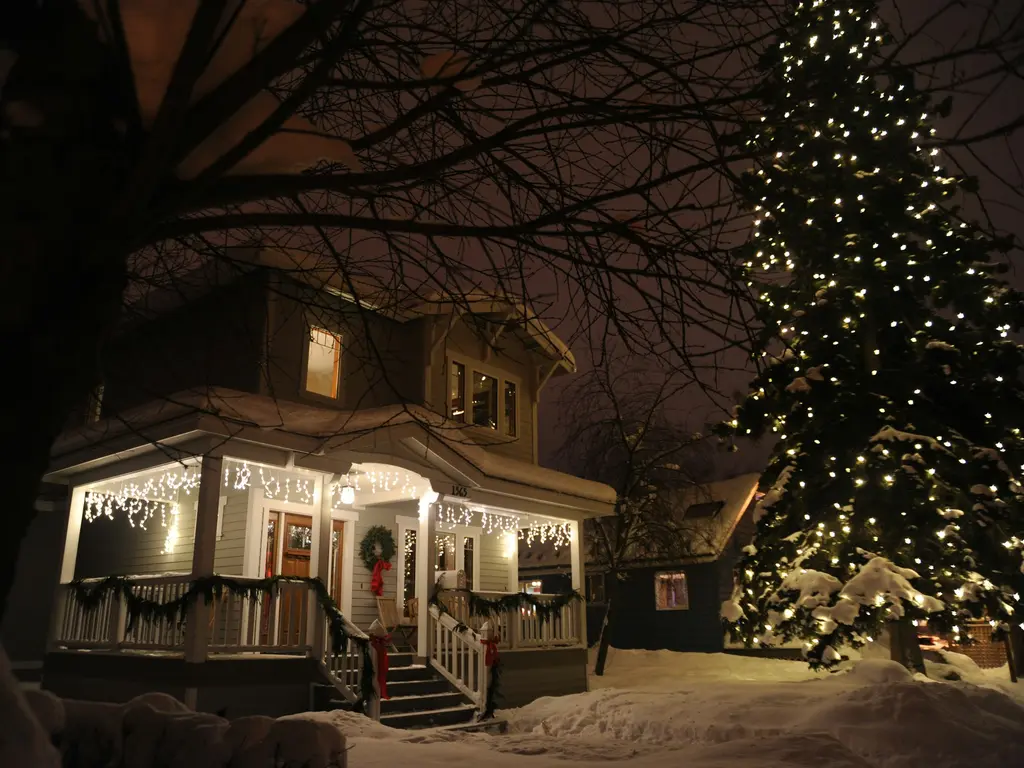
Put the whole tree on a smart plug or a timer. NFPA and the NCTA both say lights go off when you leave the house or go to bed, and a schedule handles that without anyone having to remember. If you're also lighting the outside of the house, our outdoor holiday lighting guide covers the roofline side.
When to buy, and when to take it down
Several Pennsylvania choose-and-cut farms told the Altoona Mirror this month that they're opening the weekend before Thanksgiving because buyers keep coming earlier. The tallest, fullest trees tend to go first. If you want a twelve-footer or larger delivered and set, book the delivery now and ask whether the service includes a fresh cut on arrival and a pickup date in January.
Plan the exit when you plan the entrance. NFPA says 35% of home Christmas tree fires happen in January, as cut trees keep drying out. Set a take-down date on the calendar for the first week of the new year, and line up the haul-away or your town's tree recycling pickup. Never burn the branches in the fireplace; the NCTA is clear on that one.
Pick the spot, measure the ceiling, and order the stand this week. The tree itself is the easy part.