
This article contains affiliate links. As an Amazon Associate we earn from qualifying purchases.
Plenty of beautiful fireplaces sit dark all winter.
Usually the reason is practical. The wood fire smokes a little when the wind is from the north, or the room was laid out so the fire faces a hallway instead of the sofa. Late October is the right moment to sort that out, because the sweeps and hearth installers in cold-weather markets get busy as soon as the first frost hits.
Here's how we'd think about it, room by room and fuel by fuel.
Wood: the real thing, with real upkeep
A wood fire is the one people mean when they say they want a fireplace. The crackle, and the smell of oak or cherry burning. Only a real fire delivers both.
It asks more of you, though. You need dry wood, and dry means seasoned. The EPA's Burn Wise program says wood burns best at a moisture content under 20 percent and should be seasoned for at least six months, split, stacked off the ground, and covered only on top. A pin-type moisture meter costs very little and settles the question in ten seconds. Test a freshly split face, since the outside of a log always reads drier than the middle.
Wet wood smolders and coats the flue with creosote. If your fire has always been a little sulky, check the wood before you blame the chimney.
For an existing masonry fireplace that's beautiful but inefficient, an EPA-certified wood insert is worth a look. You keep the real fire behind a glass door and get far more of the heat into the room. Our pick for a library or den that gets used most nights in winter.
Gas: the fire you'll actually use on a Tuesday
A good direct-vent gas fireplace is the honest answer for most families. Press a button or ask the house system, and there's a fire in the family room before the kids have their coats off. Town & Country, Mendota, Regency, and Heat & Glo are the names you'll hear from hearth dealers, and the best of their units have realistic log sets or a clean linear flame over glass media.
Two details separate a good gas fireplace from a disappointing one.
First, the flame. Ask the dealer to light the exact model, at the exact width, with the exact media you're considering. A tall orange flame that wanders looks like a fire. A short blue row looks like a cooktop.
Second, the glass. Under the ANSI standards for vented gas fireplaces, any glass-fronted unit made after January 1, 2015 whose glass gets hotter than 172°F in testing has to ship with a protective barrier, usually a fine mesh screen, according to the Hearth, Patio & Barbecue Association (HPBA). That glass gets hot enough to burn a small hand badly. If you have young children or grandchildren visiting for the holidays, make sure the barrier is in place, and on an older unit ask the manufacturer about an approved retrofit screen.
Electric: better than its reputation, in the right room
Linear electric fireplaces from Dimplex and Modern Flames have gotten far more convincing, with layered LED flames and real depth. They need no flue, so they can go where a gas or wood unit can't: a primary bedroom wall that backs onto a closet, a lower-level media room, a high-rise apartment.
We'd use electric for atmosphere in a secondary room and keep the main living room for wood or gas. In the room where you'll sit by the fire on Christmas Eve, the real flame earns its place.
Make the room face the fire
The best fireplace in the world won't get used if the furniture ignores it. Pull the sofa so it faces the hearth, with a pair of chairs angled in and a low table between them. In a big great room, a second seating group around the fire works better than one long sectional aimed at the television.
If the TV has to go over the mantel, keep the mantel deep and the screen high enough to be comfortable, and check the manufacturer's clearance for anything mounted above the opening. On many gas units that clearance is the deciding factor.
Surrounds and mantels that suit the house
Material matters more than ornament here.
- Limestone or honed marble for a traditional living room. A simple bolection or flat surround in a pale stone looks right for decades.
- Plaster or limewash carried straight up to the ceiling, for a modern or Mediterranean house. Brass or blackened-steel trim at the opening keeps it crisp.
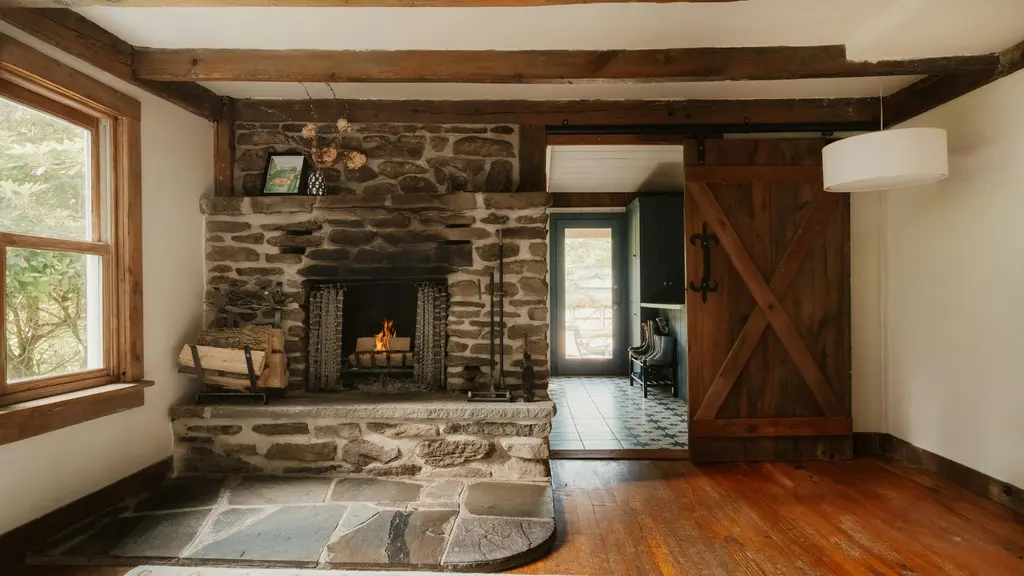
- Reclaimed brick or fieldstone for a lake house or ski house. Keep the mortar joints tight and the color consistent.
- Wood paneling around the opening in a library. Stay within the clearances in the unit's installation manual, which spell out how close combustible trim and mantel shelves can sit.
Hearth extensions count too. A wide, single-slab hearth in the same stone as the surround reads as one piece, and it gives you a place to sit on a cold night.
Dress it for the season
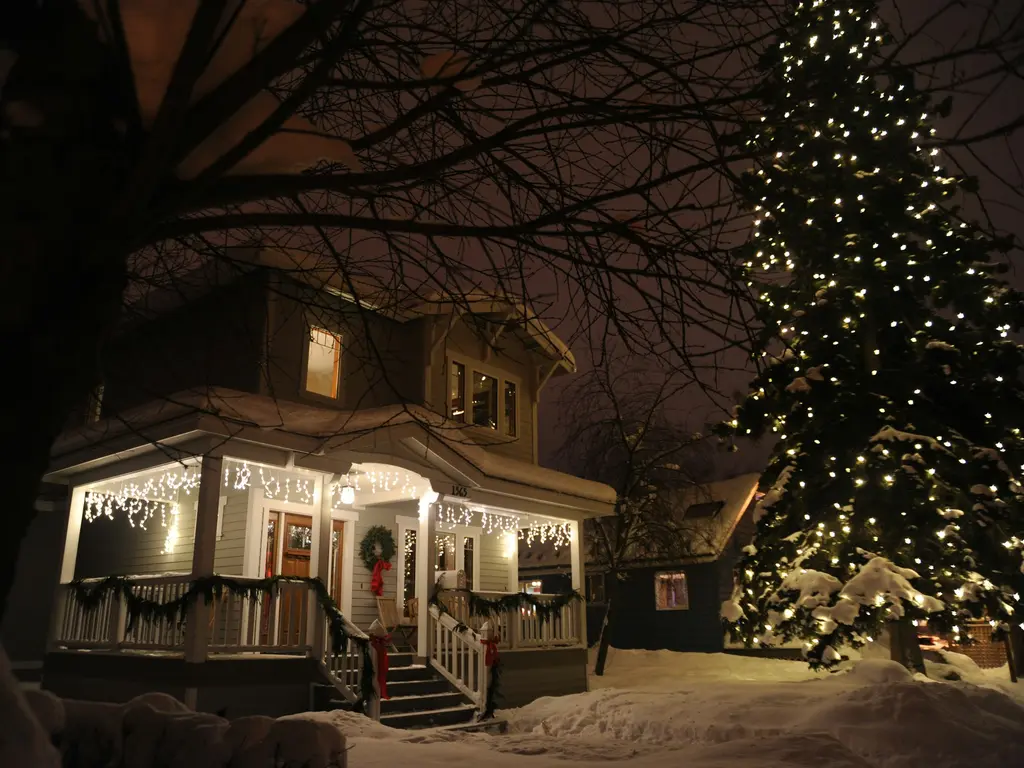
Winter styling works best when it's simple, and the fire sets one firm rule. The U.S. Fire Administration advises keeping anything that can burn at least three feet from a fireplace, and that includes garland and stockings.
So put the greenery where it can stay all month. A pair of potted evergreens or tall cut branches in stone urns, set well back on either side of the hearth, frames the fire better than a garland drooping toward the opening. On the mantel itself, use things that shrug off heat: a large piece of art, a pair of heavy brass candlesticks left unlit, an antique clock. Hang the stockings on the stair rail or a bench by the tree.
For wood, a tidy steel log holder beside the hearth is part of the look. Keep a night or two of wood inside, three feet from the opening, and the rest out on the rack.
Book the inspection now
The U.S. Fire Administration recommends having chimneys and vents inspected and cleaned every year by a professional. Do it before the first fire of the season, and do it for gas fireplaces as well as wood. Look for a sweep certified by the Chimney Safety Institute of America (CSIA).
If you're buying a home with a fireplace, ask for a Level 2 inspection. CSIA's guidance, which follows NFPA 211, recommends that level when a property is being sold, and it includes a video scan of the flue interior. A general home inspection often stops at what's visible from the firebox. Our guide to negotiating on a luxury home this fall covers how to use findings like these.
A few habits round it out. The USFA advises using a glass or metal screen to keep sparks in, putting the fire out before you go to bed or leave the house, and putting cooled ashes in a metal container with a lid, outside, at least 10 feet from the house. Make sure you have working carbon monoxide alarms on every level, and test them monthly.
Keep the heat in the room
A roaring fire in a drafty room still feels cold. Close the damper when the fire is fully out so warm air stays in the house, and on a masonry chimney ask your sweep about a top-sealing damper. Heavy lined drapery helps too, and our piece on window treatments for luxury homes in winter gets into the fabrics and linings that matter.
If your family moves outside after dinner, our guide to fire pits and outdoor fireplaces covers that side of the evening.
What to do this week
- Call a CSIA-certified sweep and book the inspection and cleaning, for gas and wood alike.
- Test your firewood with a moisture meter. Anything reading at 20 percent or above goes back on the rack.
- On a gas unit, confirm the safety barrier is on the glass.
- Test every carbon monoxide alarm and smoke alarm in the house.
- Turn the sofa toward the fire.
If you're weighing a new fireplace or insert, go see the flame in person this weekend. Installation calendars fill fast once the weather turns.