
This article contains affiliate links. As an Amazon Associate we earn from qualifying purchases.
The front door gets the architect's attention. The garage door gets the traffic.
In a lot of luxury homes, the family, the dog, the groceries, and every pair of wet boots come in through a side or garage entry, and that's the room that decides whether January feels organized or feels like a ski lodge locker room. Late October is the right time to look at it hard. The first sleet hasn't come yet, the holiday coat pileup is a month out, and a carpenter or tile setter can still fit a small job in before the schedule fills.
Here's where we'd put the effort.
Start with how people actually come in
Stand in the garage and walk the route. Note where keys and bags land, and count the steps it takes someone in wet boots to reach hardwood.
That last one matters most. Every step between the door and a place to sit and pull boots off is a step of salt and meltwater tracked across the house. If the bench sits at the far end of a long hall, people won't walk to it. They'll kick boots off by the door and leave them there. Put the seat right inside the entry, with the boot tray directly under or beside it, and move storage outward from there.
A second door is worth the trouble. A pocket door or a glazed door between the mudroom and the kitchen keeps cold air and dog smell out of the main rooms, and it lets you close off the mess when guests arrive.
Floors that take salt, slush, and a wet dog
This is the decision we'd spend money on first, because it's the hardest to change later.
Porcelain tile is our pick for most mudrooms. It doesn't care about rock salt, it doesn't swell, and it cleans with a mop. The spec to ask for is slip resistance: under ANSI A326.3, the tile industry's slip-resistance standard (revised in 2021, published through the Tile Council of North America), a tile rated Interior, Wet has to test at a wet dynamic coefficient of friction of 0.42 or higher, or be declared for that use by the manufacturer. An entry floor gets walked on wet all winter, so that's the rating to look for on the spec sheet. Skip polished finishes here, however good they look in the showroom.
Natural stone works too. Honed slate and tumbled limestone hide grit well and look right in older homes, but they need sealing, and salt brine will find any spot you missed. If you already have stone, reseal it now, before the first storm.
Grout color is a small call with a long tail. Go a shade darker than you think. Light grout in a mudroom looks gray by February.
Radiant heat under the tile is the upgrade we'd add if you're opening the floor anyway. An electric mat under porcelain dries puddles and boot soles faster, keeps grout lines from staying damp, and makes the room comfortable for the thirty seconds you're standing there in socks. It's far easier to do now than after the tile is down.
And give the floor a place for water to go. A recessed mat well at the door, sized for a standard entrance mat, keeps the mat flush so nobody trips on the edge. A rubber boot tray with a raised lip holds melt off the tile until it evaporates.
Lockers that dry what you hang in them
Open lockers beat closed cabinets for daily coats. Wet wool and down need air, and a closed cabinet door traps moisture until the whole thing smells like a gym bag.
So we'd split the storage:
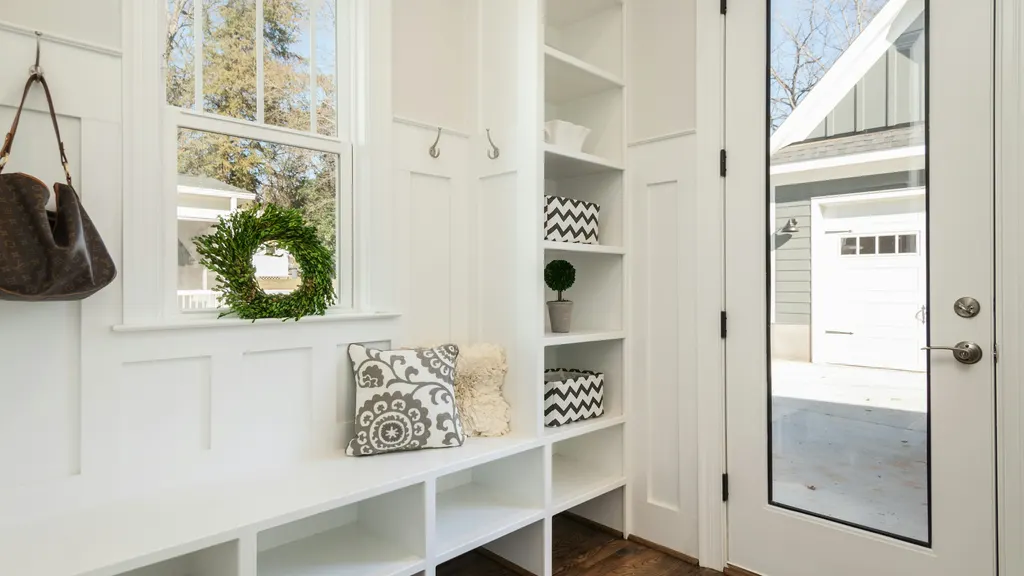
- Open cubbies with two hooks each for the coats people wear this week, one per family member plus one for guests
- A shoe shelf or slatted base under each bench section, so boots drip onto something that isn't the cabinet floor
- Closed upper cabinets for off-season gear and the box of spare gloves
- A shallow drawer or two at bench height for keys, sunglasses, dog leashes, and the garage remote
- A charging drawer or a wall outlet inside one cubby, so phones and the dog's GPS collar land somewhere other than the kitchen counter
If you want doors for a cleaner look, use louvered or caned panels, or leave a gap at the top and bottom of each door so air moves. We'd avoid solid painted doors with no ventilation. The inside of a closed cabinet is where the mildew starts.
Hooks matter more than they get credit for. Solid brass or bronze double hooks hold a wet parka without sagging, and they age well. Thin decorative hooks bend under the first heavy coat.
Make drying part of the room
Storage is half the job. The other half is getting everything dry by morning, and that's the part people notice the first time they walk through.
A wall-mounted boot and glove dryer, plugged in near the bench, handles ski boots and kids' snow gloves overnight. A heated towel rail does the same job for hats and dog towels, and it looks finished in a way a plastic drying rack never will.
Then deal with the air. A bathroom-style exhaust fan on a humidity sensor pulls out the damp that comes off wet coats and wet dogs, and it's a simple add if there's attic space above. If the mudroom sits next to the laundry, put a door between the two. Wet towels go straight into the washer, and the laundry sink doubles as a spot to rinse muddy boots.
The dog wash station
If you have a dog, this is the feature we'd fight for.
A raised tub, about knee to hip height, saves your back. Tile the walls at least to shoulder height around it, add a handheld sprayer on a long hose, and ask the plumber for a thermostatic or pressure-balancing valve so the temperature doesn't jump when someone flushes a toilet or starts the dishwasher. A tie-off ring screwed into the wall is a small detail that makes the whole thing usable.
No room for a tub? A floor-level shower pan with a linear drain, tucked into the corner of a larger mudroom, works for big dogs who won't climb into anything anyway.
Plan for holiday coats now
Thanksgiving and December parties break most mudrooms. Twenty guests bring twenty coats, and they don't belong on the family's hooks.
Decide now where guest coats go. A front hall closet with good wooden hangers is the classic answer. If yours is small, a rolling garment rack in a guest bedroom works, and it can live in a closet the rest of the year. If you're planning a full season of hosting, our guide to holiday-ready dining rooms covers the rest of the house.
Put an umbrella stand by the front door, too. Wet umbrellas leaning against a wall leave marks on plaster and paint.
What to do before the first storm
A short list for the next two weekends:
- Reseal stone floors and grout, and let them cure before salt season.
- Check the weatherstripping and door sweep on the garage entry. A gap at the threshold lets in cold air and blown snow. Our pre-winter systems check covers the rest of the house's seals and systems.
- Put a heavy rubber-backed entrance mat outside the door and a second one inside.
- Set out boot trays and test the boot dryer.
- Clear the hooks of summer gear and move it to the upper cabinets.
- Run the exhaust fan and confirm it actually vents outside, not into the attic.
If you're selling this winter
Expect some buyers to come in through the garage entry, since that's where the driveway leads. A clean, well-lit mudroom with empty hooks, one good bench cushion, and a dry floor reads as a house that's easy to live in. For the rest of the house, see our guide to staging that photographs like editorial.
Start with the floor and the door seal this week. Lockers and the dog station can follow, but the first storm won't wait for either.