
This article contains affiliate links. As an Amazon Associate we earn from qualifying purchases.
Late October is when holiday lighting stops being a December problem.
The crews that hang lights on big rooflines fill their schedules well before Thanksgiving, and permanent-lighting installers book up on the same curve. Call after Halloween and you may be looking at a January date. So this is the weekend to decide what the house should look like after dark this season, and who's putting it up.
For a large house there are two good paths. We'll walk through both, then the order we'd light things in.
Path one: a permanent roofline system
A permanent system mounts LED pixels inside a slim aluminum channel along the eaves, color-matched to the trim, and wires them back to a power supply and a controller. In July you mostly see a thin line under the gutter. From the app you get warm white for December, orange for Halloween, team colors for a playoff game, or plain soft accent light on an ordinary Tuesday.
The names you'll hear from installers are Jellyfish, EverLights, Trimlight, and Oelo. Retail kits, Govee's permanent outdoor lights among them, work fine on a simple single-story roofline you can reach from a short ladder. On a two- or three-story house with steep gables, we'd hire the pro version. The channel has to follow every return and peak cleanly and the wiring has to disappear, and that's exactly where a cheap install shows.
The appeal is simple. It goes up once, nobody climbs a ladder in December again, and it works all year as architectural light.
The tradeoff is that it's a permanent change to the facade. On a historic home, a stone house with a slate roof, or anywhere with an HOA or architectural review board, get approval first and ask exactly where and how the channel attaches. Then ask to see the white setting in person, at dusk. Some pixel systems make a cold, bluish white that looks like a gas station canopy. You want something close to the color of a table lamp, and a good system lets you dial it in.
Path two: a seasonal crew that hangs and removes
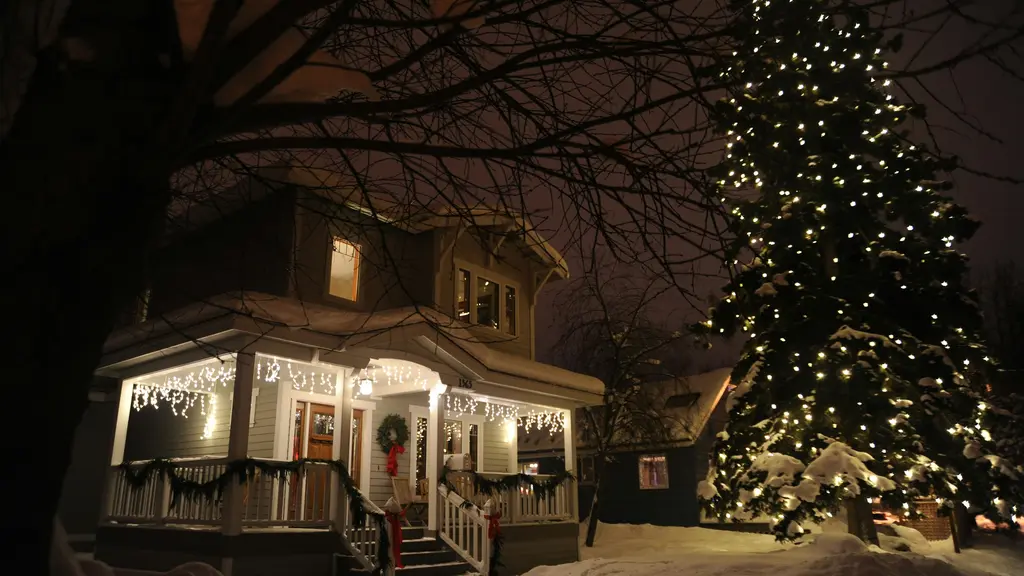
The classic service still wins when the look you want is greenery. Garland around the front door surround, wreaths on every front window, lit trees along the drive. Those are jobs for a seasonal crew. They design the display, supply commercial-grade LED bulbs and the greenery, hang it in November, take it down in January, and store it until next year.
What to ask for:
- Commercial-grade C9 or C7 LED bulbs on SPT-2 wire, the heavier cord the trade uses, rather than retail strands
- Clips that grip gutters and shingles, with nothing nailed or stapled into trim, stucco, or masonry
- A written takedown date, plus storage and failed-bulb replacement in the contract
- Proof of liability insurance, since they'll be on your roof
Our pick for a traditional facade is the seasonal crew with real greenery. It photographs better than any app-controlled system, and it looks like the house was dressed on purpose.
What we'd leave off the lawn
Big inflatables and projector lights aimed at the front of the house. They read as temporary, they flatten the architecture, and the projector pattern washes out stone and brick detail. If you want motion and color, let a permanent system handle it and keep the lawn clean.
Light the house in the right order
Start with the front door. It's the focal point of the facade and the one place every guest looks. A lit wreath and garland on the surround, or a matched pair of lit planters, does more than any amount of roofline.
Then the roofline, if it's a good one. A clean line along the main eave shows off the shape of the house. Outlining every dormer, porch roof, and garage gable just looks busy.
Then trees. We'd wrap one or two specimen trees close to the house in warm white, trunk and main limbs, instead of draping strands loosely over every shrub. Uplights at the base of a large oak or a pair of tall evergreens add depth with no wire showing.
Last, the drive and walk. The path lights you already have usually beat a row of new stakes. If guests will park on the street for a party, make sure the walk from the curb to the door is lit end to end. That matters more than any decoration.
Pick one white and stick with it. Warm and cool whites on the same facade are the giveaway of a rushed display, and it's an easy one to avoid: check that every box you buy lists the same color temperature, 2700K or close to it for that lamp-like glow.
Safety specs worth asking about
Holiday lights spend about six weeks outside in rain, sleet, and snowmelt, so this is where we'd be strict.
Every strand, cord, and decoration used outside should be marked for outdoor use, and all of it should plug into a GFCI-protected circuit. The Electrical Safety Foundation International (ESFI) recommends both, and suggests a portable outdoor GFCI wherever an outlet lacks that protection. UL Standards & Engagement notes that holiday lights certified to UL 588 go through rain, immersion, and UV testing, so look for that listing on anything you buy.
If you're hanging anything yourself, follow ESFI's ladder guidance: a wooden or fiberglass ladder, set so it extends at least three feet past the edge of the roof, and you and your equipment at least 10 feet from power lines. For a second-story roofline we'd hand the job to a crew.
Put everything on a schedule. UL Standards & Engagement advises turning decorations off overnight and whenever you're away, and an outdoor smart plug or a permanent system's built-in scheduler makes that automatic. If the house already runs a lighting control system, ask your integrator to add the holiday circuits to it. Our guide to smart home features luxury home buyers expect covers what those systems can handle.
Plan around the parties
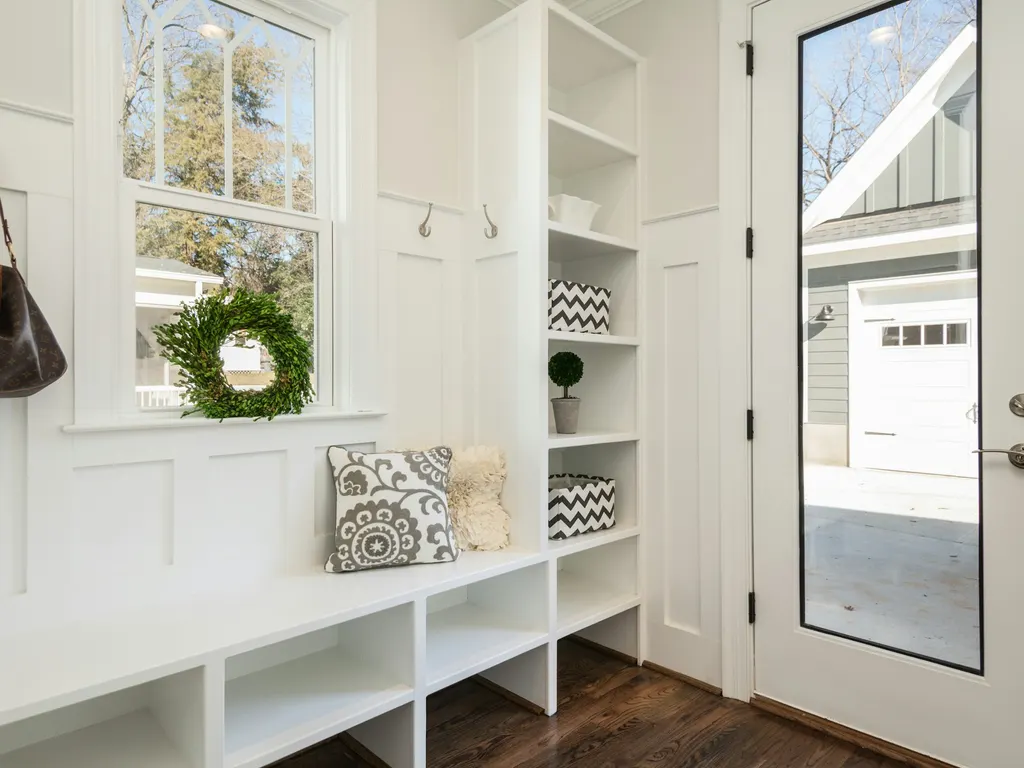
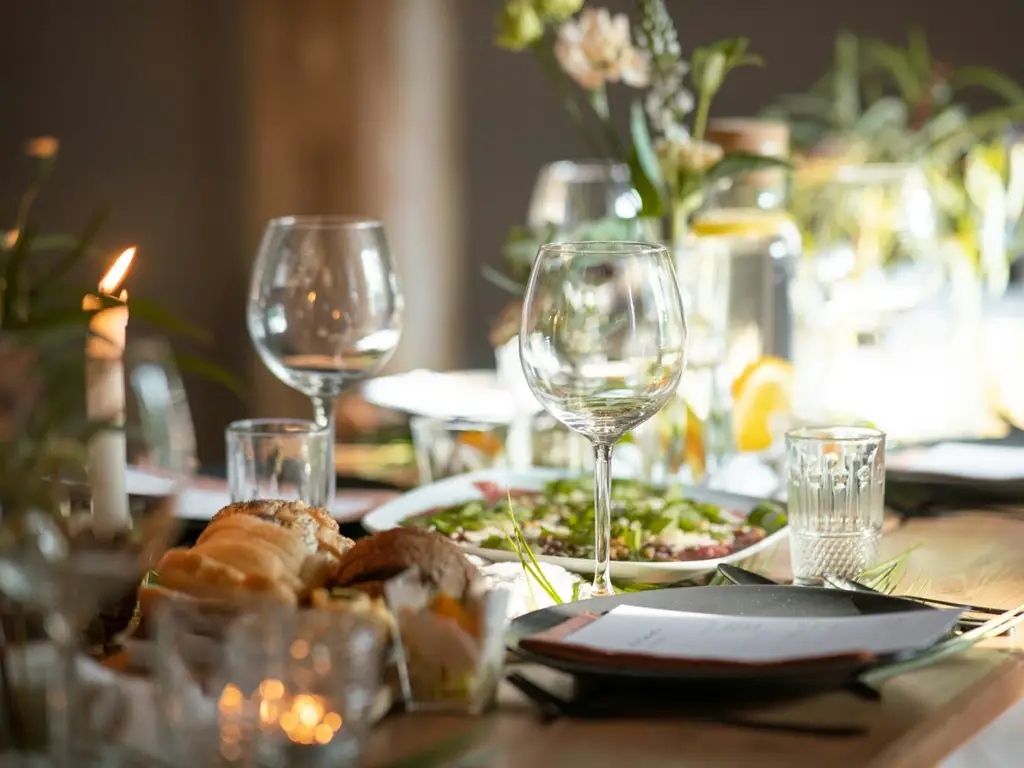
Set the outdoor lights to come on before the first guest arrives and stay on until well after the last one leaves. Light the garage entry too, since family and caterers will use it; our mudroom guide covers that side of the house. Inside, the evening ends up at the table, and our piece on holiday-ready dining rooms covers the lighting over it.
What to do this week
- Decide permanent or seasonal. For permanent, get quotes from two installers and ask to see the warm white setting at dusk.
- If you have an HOA or a historic district review, send the request now.
- Press the test button on every outdoor GFCI outlet, and note which outlets share a circuit.
- Walk the facade at night and choose the front door, one roofline, and one or two trees. That's the plan.
- Order timers and outdoor-rated cords while the shelves are still full.
If you only do one thing this weekend, call the installer. The rest can follow in November, and the best crews are booking now.