
This article contains affiliate links. As an Amazon Associate we earn from qualifying purchases.
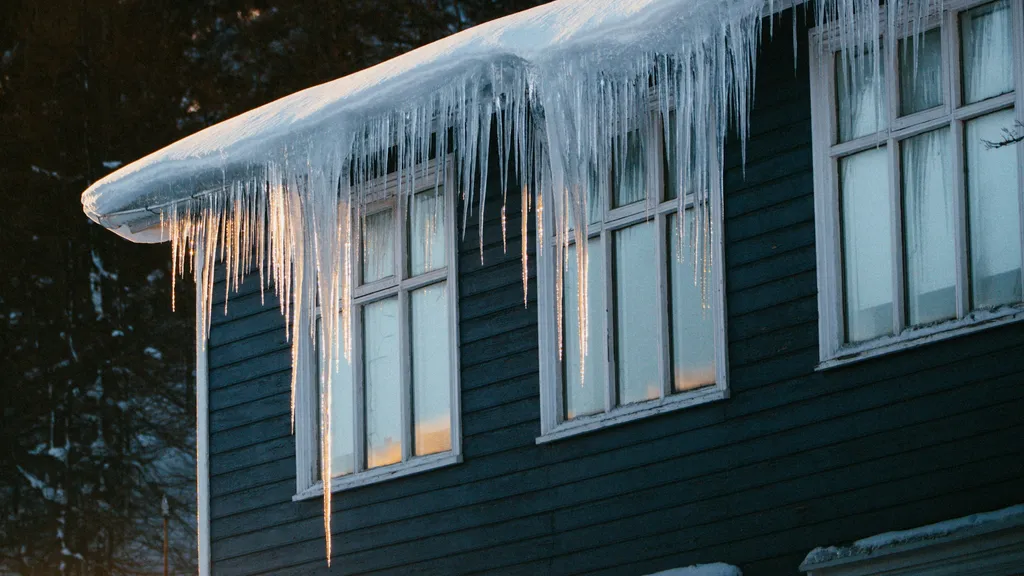
The first heavy snow of the season usually tells you how a roof is doing. A week later, look up at the eaves. If you see a thick ridge of ice along the gutters and icicles hanging off it, there's a good chance some of the heat you're paying for is ending up in the attic.
That ridge is an ice dam. Snow melts higher up on the roof, the water runs down to the cold overhang, and it freezes again at the edge. Each warm afternoon adds another layer. Eventually the water behind the ridge has nowhere to go, so it works back up under the shingles and into the wall or ceiling below.
The damage tends to show up in March, as a brown stain on a living room ceiling or paint bubbling under a bay window. The cause was set in November.
Why big houses get them more
A simple ranch with a plain gable roof and a well-insulated attic can go years without one. Many high-end homes are built in ways that make ice dams more likely.
Complex rooflines are the biggest reason. Valleys, dormers, turrets, and the spot where a low porch roof meets a taller wall all collect snow and slow the meltwater down. Vaulted and cathedral ceilings leave very little room between the drywall and the roof deck for insulation. Then there are the recessed lights, often dozens of them, punched through the ceiling of the top floor. Each one can be a small chimney for warm air.
Equipment in the attic makes it worse. Air handlers and ductwork up there, bath fans that vent into the attic instead of outside, and a finished bonus room over a heated garage all put warmth right under the roof. Skylights add more edges for water to find.
Find the heat first
Fixing ice dams starts in the attic, and the first job is figuring out where the warm air gets in.
Walk the house the morning after a fresh snow with no wind. Bare patches or thin stripes of snow on the roof show where heat is escaping. In the attic, look for frost on the underside of the roof deck and on nail tips, dark streaks in the insulation (dust filters out of moving air), and gaps around the attic hatch.
For a large or complicated house, we'd hire an energy auditor. A blower door test with an infrared camera shows exactly which fixtures, chases, and top plates are leaking. University of Minnesota research on cold-climate roofs calls that pairing the best way to find air leaks into the attic, and it's usually far cheaper than one ceiling repair.
Seal, then insulate
The order matters. University of Minnesota Extension says to make the ceiling airtight first, so warm, moist air stays in the house and out of the attic, and only then add insulation. Insulation slows heat moving through the ceiling. Air sealing is what stops warm air pouring through the holes in it.
The usual leaks:
- Recessed lights, especially older cans built before airtight ratings were common
- Plumbing vents, wiring holes, and flue chases
- The attic hatch or pull-down stairs
- Ducts and the air handler, plus any joints with tape that has failed
- The tops of interior walls and knee walls in finished attic rooms
Once the leaks are sealed, bring the insulation up. The University of Minnesota Climate Adaptation Partnership recommends R-50 to R-60 of attic insulation in Minnesota. Your local code and climate will set your target, but if you find a few inches of old fiberglass, there's work to do.
Vaulted ceilings are harder. With no attic to crawl into, the fix often waits for a reroof, when the deck can come off and insulation can go on above it.
Let the roof breathe
A cold roof deck holds its snow, and outside air keeps the deck cold. The standard setup brings air in at the soffits and lets it out near the ridge, with baffles at each rafter bay to keep the insulation clear of the air path. The University of Minnesota roof study says intake should at least equal exhaust.
Look up at the soffits from outside. Painted-over vents, solid soffit boards on a renovation, or insulation stuffed tight against the eaves all choke it off. Ventilation works best after the air sealing is done. Adding vents to a leaky attic just moves more warm house air through it.
What's under the shingles
The last layer of defense sits out of sight, under the roofing. In places with a history of ice dams, the International Residential Code (section R905.1.2) calls for an ice barrier under the roofing, either a self-adhering membrane or two layers of underlayment cemented together. It runs from the lowest edge of the roof to a point at least 24 inches inside the exterior wall line. On roofs pitched 8:12 or steeper, it also has to cover at least 36 inches along the slope from the eave.
That's the code minimum. On a house with deep overhangs, low-slope porch roofs, and lots of valleys, we'd ask the roofer to go further at the next reroof: membrane in every valley, at every change in pitch, around skylights and dormers, and well up the slope where snow drifts. The cost difference is small next to a new roof, and it's the one chance you get.
Heat cables and other quick fixes
Heat cables are tempting. The Center for Energy and Environment in Minneapolis advises against using them to prevent ice dams, because they're hard on the roof and expensive to run. We'd only use them as a patch for one known trouble spot, like a valley above the front entry, while the attic gets fixed. If you go that route, pick self-regulating cable made for roofs, have an electrician put it on its own GFCI circuit, and switch it off when the season ends.
A roof rake is the safer quick fix. Pull the snow off the first several feet above the gutters from the ground, after each big storm. Leave a thin layer on the shingles to protect the granules from the rake. CEE points out that raking has to be done repeatedly to work and that it can damage shingles, so treat it as upkeep while the real repair is scheduled.
Two things to avoid: chopping at the ice with a hammer or chisel, and climbing onto a snowy roof. If a dam is already thick, a roofing company with a low-pressure steamer can clear it without tearing up the shingles. Book one before the first storm. They fill up fast.
If water is already coming in
University of Minnesota Extension says that in an emergency, cutting channels through the dam lets the trapped water drain off the roof. That's a job for a pro with a steamer.
Inside, catch the drip, poke a small hole in a bulging ceiling to let the water out in a controlled spot, and photograph everything before you clean up. Call your insurer early. Coverage for ice dam leaks varies by policy, and our guide to home insurance for luxury homes covers what to check on yours. Get the wet insulation out and the cavity dried quickly, before mold has a chance to start.
When to do it
Air sealing and insulation are best done now, before the attic is buried in snow and cold enough to be miserable to work in. Energy auditors and insulation crews have more openings in November than they will in January.
If you're closing the house for the winter, put a roof check after every big storm on the home watch list. Our guide to leaving a luxury home empty for winter has the rest of that routine. And if meltwater off the roof keeps refreezing on your front steps or driveway, a snowmelt system solves the ground-level half of the problem.