

The houses people remember aren't always the grand ones. They're the ones where the evening runs long because nobody wants to go home.
Autumn is when that gets tested. The parties move inside, the guest lists shrink, and you get to use everything the season hands you: cold evenings, heavier food, low light, and that first step back into a warm room.
We don't think entertaining well means being formal anymore. It means being comfortable, with a lot more planning behind it than anyone notices. Drinks in the library, dinner by candlelight, then the fire or a room with a record player. It looks spontaneous. It isn't.
Plan the evening as a route
Forget the flowers for a minute and walk through the night in your head. Where do people come in, and where do their coats go? Where's the first drink? What makes anyone get up and move to the next room?
You want a rhythm. Nobody should be stuck in a crowded entry. The drinks should be somewhere people can stand and talk without blocking the kitchen, and dinner should arrive without someone clapping their hands to break up a good conversation.
In a big house our advice is simple: don't open every room. Choose a few spaces (the entry, somewhere for cocktails, the dining room and one place to end up) and treat that as the whole house for the night. Close the other doors. Dim what you're not using. Put the light where you want people. Done this way, a large house feels generous instead of cavernous.
With a smaller group you can get more creative. A table in the library, the breakfast room or the wine cellar often beats a formal dining room built for twice as many people.
The cocktail hour
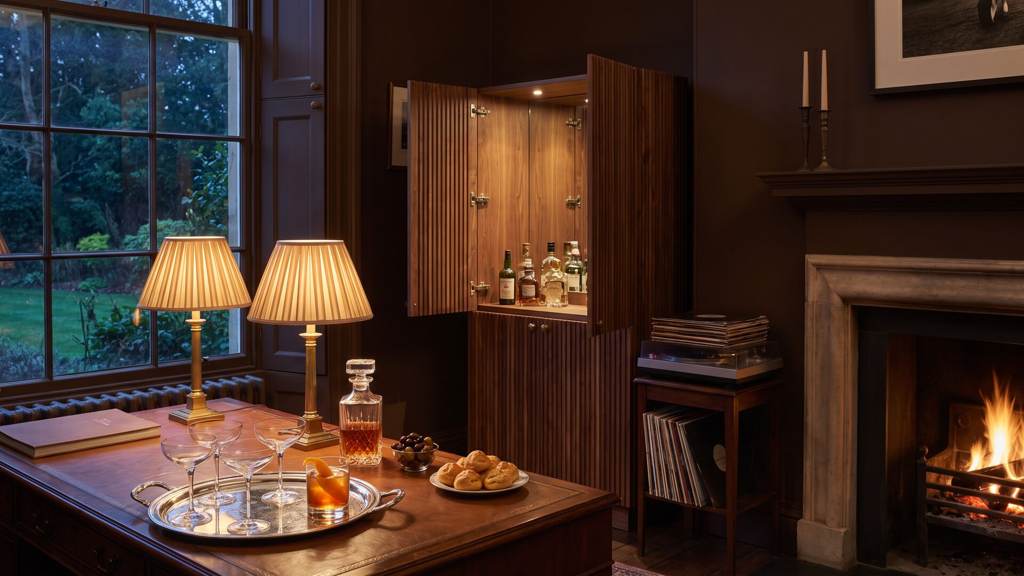
Get a drink into someone's hand fast. A hidden bar, a drinks cabinet or even a good tray does the job. We'd offer one seasonal cocktail, a genuinely good nonalcoholic drink and a short wine list, and leave it there. Long drinks menus make guests do homework.
For fall, go easy on the sugar. Pear, fig, apple, rosemary, black tea, ginger or a little warm spice will read as autumn on their own. And give the spirit-free drink the same glass and the same attention as the cocktail.
Pick the room with care. We love a library with low lamps for this, but a conservatory at dusk or a terrace warmed by fire can be just as good. Music goes on before the first guest, at a volume nobody has to talk over.
A few small bites are enough, the kind you can eat standing up. Warm gougères, smoked fish, marinated mushrooms, some crostini with roasted squash. Seasonal, and light enough that people still want dinner.
The table
You don't need a theme. You need contrast, some texture, and a few things with a past.
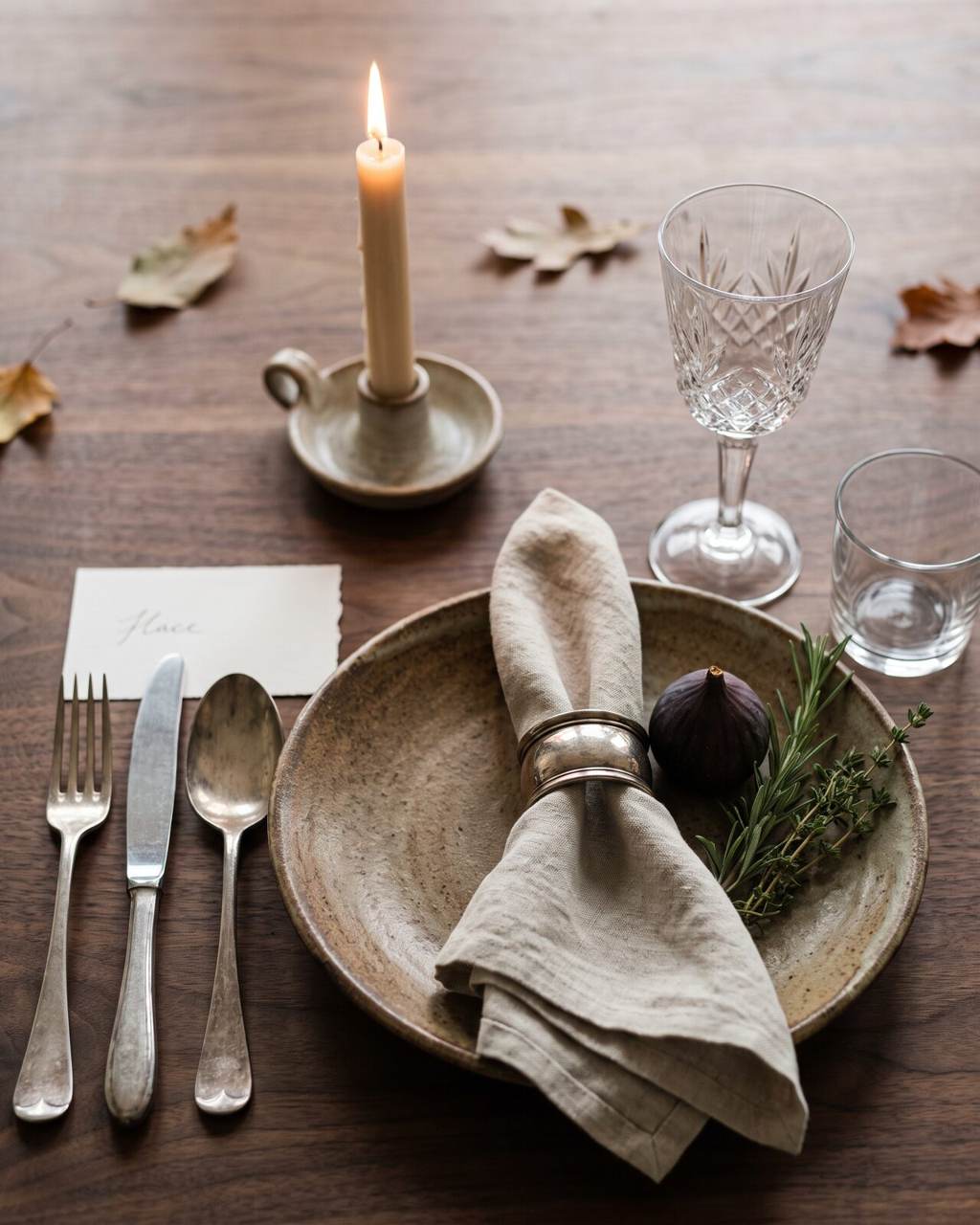
Look at the room first. If the walls, the art or the rug are already doing a lot of color, the table can stay simple with Belgian linen, hand-thrown ceramics and clear crystal. If the room is plain, that's your chance for patterned porcelain, colored glass or dark, saturated flowers.
Mixing periods almost always beats one matching set of china. Modern plates look good next to inherited silver, and antique candlesticks wake up a contemporary table. The common thread might be a color, a material or simply your taste.
Two practical rules. Centerpieces stay low enough to talk over (branches, seed pods, garden roses, dahlias and fruit all work, and a row of small vessels is easier to shift than one big arrangement). And the candles at the table are unscented, so they don't fight the food and wine.
Candles alone won't light a dinner, though. Turn the chandelier and the overheads down and let sconces, lamps and candles do the work, so you can actually see faces.
The menu
Cook for the kitchen you have, the help you have, and how much you want to be at the table yourself. A showy dinner isn't luxurious if the host spends it stressed out and missing.
What works for us is picking one centerpiece and getting it right. A whole roasted fish is great for this, or a rack of lamb, a game bird, even a vegetable tart. Everything around it should be done before the doorbell rings. Start with soup in little cups if you like. Serve the first course at room temperature so you're not plating at the last second. Then take dessert and coffee into another room.
The season should be on the plate, not on the table runner. Wild mushrooms, squash, chicories, pears, grapes, nuts, whatever herbs are left in the garden. Fall food gets heavy fast, so make sure something on the plate is sharp or fresh.
As for wine, one good bottle with a story beats a long parade of labels. For a bigger group, decant and set the wine out ahead of time. Keep the pouring relaxed unless the night is meant to be formal.
Getting the house ready
Relaxed evenings are the planned ones. Walk from the kitchen to the dining room and move anything fragile, or any narrow table, that's in the way. Get the serving pieces, trivets, ice, glasses and linens out before you start cooking.
A butler's pantry helps, but a console will do as a station for water, spare napkins and empty glasses. With an open kitchen, try to keep the mess out of sight. It's a good argument for the concealed working kitchen showing up in so many high-end homes right now.
Then the small stuff. Fresh hand towels and a few flowers in the powder room. An obvious place for coats. The thermostat set before the house fills up. Blankets and lit paths if people will go out on the terrace.
If you have more than one house, keep a short inventory for each: the linens, plates, glasses and serving pieces, and where they live. It saves you from packing boxes to move things between homes.
After dinner
Most hosts forget the last act. Stay at the table too long and the evening goes flat, so move somewhere.
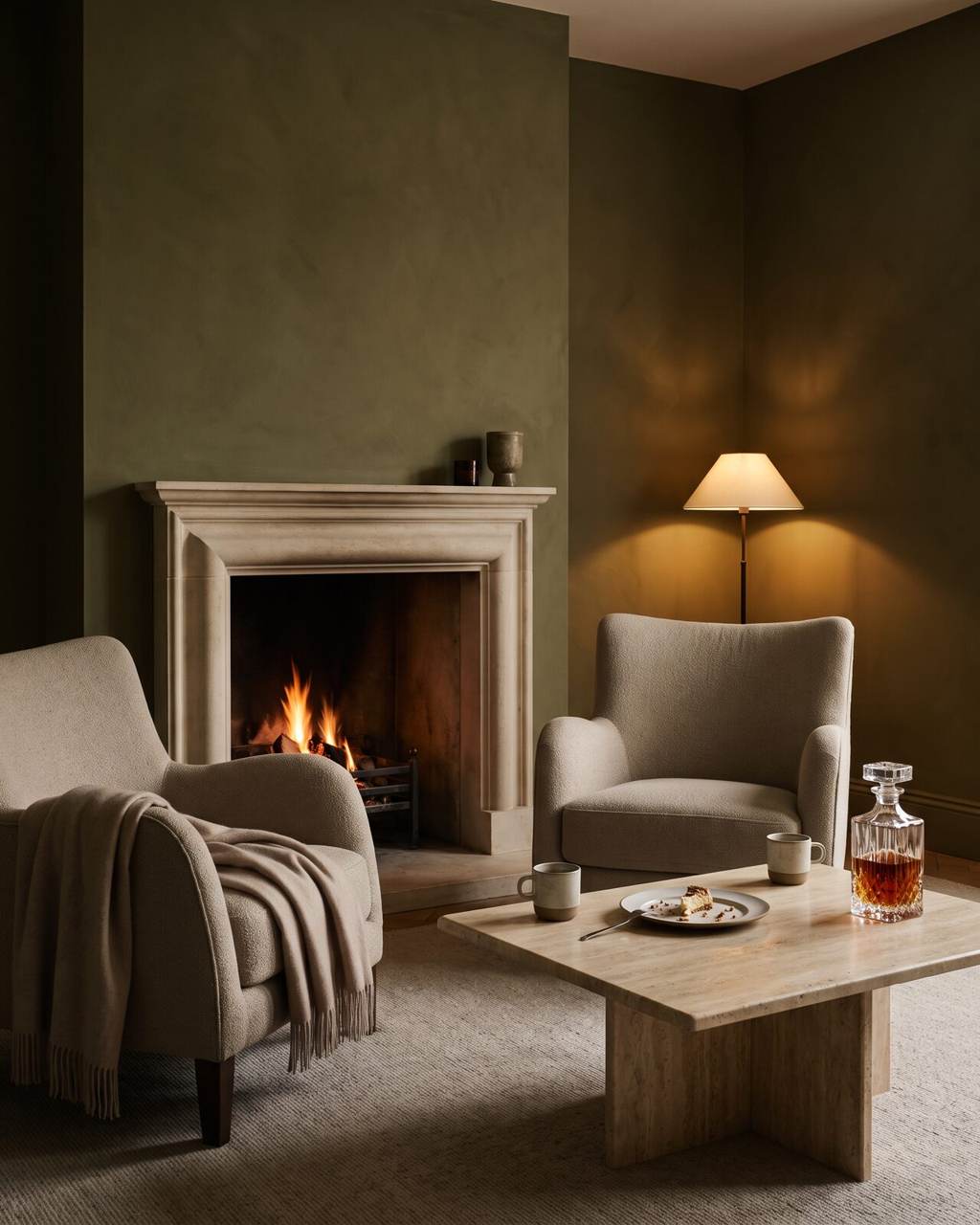
Dessert and tea by the fire. Records in the listening room. A favorite film in a screening room. A special bottle opened down in the cellar, or one last drink on a heated terrace if the night's clear.
It doesn't need to be grand. A few good chairs pulled together can turn out to be the best part of the night. Just have the drinks within reach, the lights already set and the fire going before dinner starts.
Knowing your guests
Years later, guests won't remember the flowers. They'll remember that you had their drink ready, or knew what they can't eat, or saved them their favorite seat. A handwritten place card does some of that work. So does a dish that recalls a trip you took together, or a playlist with a certain friend in mind.
And don't rush anyone. If the conversation is good, the next course can wait. All that preparation was so you could sit down and be there for it.